
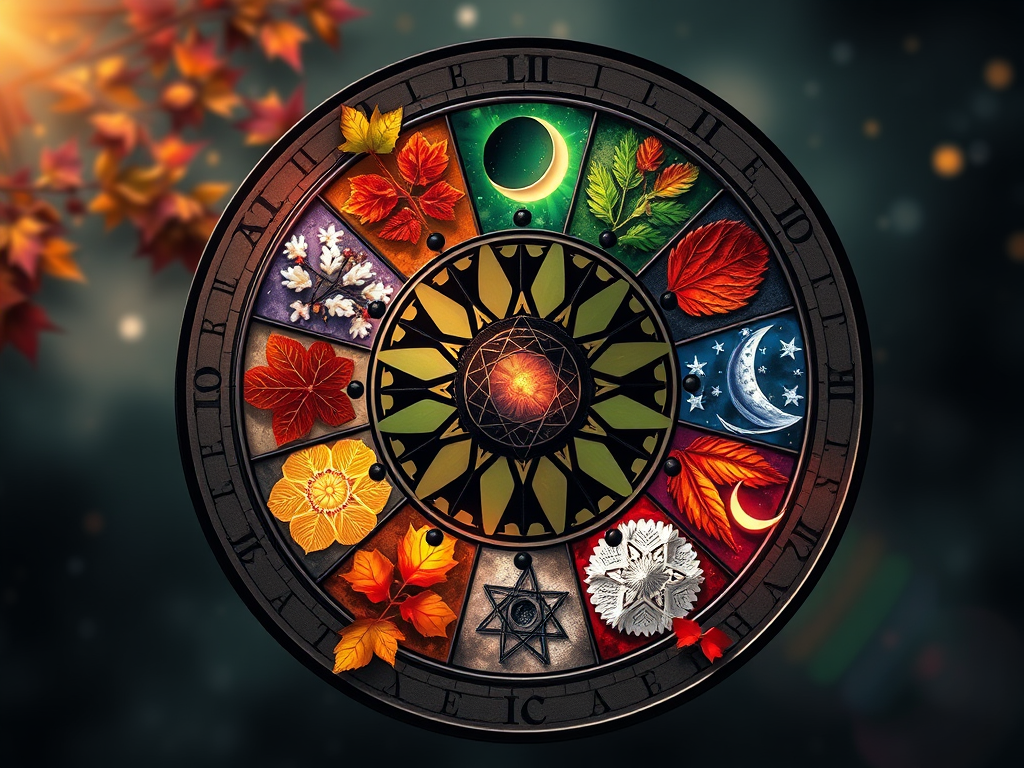
For millennia, humanity has looked to the heavens and the turning of the seasons to understand its place in the cosmos. Long before calendars dictated our daily lives, our ancestors lived in harmony with the Earth’s rhythms, celebrating the pivotal moments that marked the ebb and flow of nature’s power. This ancient wisdom, rooted in agricultural cycles and celestial observations, forms the bedrock of what modern Pagans call the Wheel of the Year.
More than just a calendar of holidays, the Wheel of the Year is a profound spiritual framework, a cyclical journey that mirrors the life, death, and rebirth of the natural world. It’s a roadmap for spiritual growth, inviting us to attune ourselves to the Earth’s energy, honor its changing moods, and find sacred meaning in every season.
This comprehensive guide will explore each of the eight major Pagan festivals, known as Sabbats, delving into their historical roots, their rich symbolism, and how modern practitioners can celebrate them to deepen their connection with the divine and the living Earth.
What is the Wheel of the Year?
At its heart, the Wheel of the Year is an annual cycle of eight festivals observed by many Pagans and Wiccans. These festivals are traditionally divided into two categories:
- Solar Festivals (Quarter Days): These four Sabbats mark the solstices and equinoxes, points determined by the Earth’s orbit around the sun. They are astronomically fixed and represent the extreme points of light and dark, and the balanced moments between them.
- Agricultural/Cross-Quarter Festivals: These four Sabbats fall approximately halfway between the solar festivals and are rooted in ancient agricultural and pastoral cycles. They mark crucial points in the growing season and the passage of human activities tied to the land.
Together, these eight points form a continuous cycle, each Sabbat flowing naturally into the next, representing the birth, growth, maturity, decline, death, and rebirth of the natural world, often personified as the God and Goddess.
The Eight Sabbats: A Journey Through the Year
Let’s embark on our journey around the Wheel, starting with the most widely recognized Sabbat, often considered the beginning of the Pagan year.
1. Samhain (Pronounced: SOW-in or SAH-vin) – October 31st
The Darkest Veil, The Ancestor’s Call
Often referred to as the Pagan New Year, Samhain marks the end of the harvest season and the beginning of the darker half of the year. Historically, it was a vital time for communities to prepare for winter, bringing livestock in from the fields and storing provisions.
- Origins: Rooted in ancient Celtic traditions, Samhain was believed to be a time when the veil between the physical world and the spirit world was at its thinnest. This facilitated communication with ancestors and spirits, but also brought forth potential dangers from mischievous entities.
- Symbolism: Death, transformation, endings, new beginnings, the honoring of ancestors, divination, reflection, release.
- Themes: This is a time to acknowledge death not as an end, but as part of the natural cycle. It’s a time for introspection, releasing what no longer serves us, and honoring those who have passed before. The darkness of winter begins here, prompting us to look inward.
- Modern Celebrations: Honoring ancestors through altars, feasts for the dead, divination (Tarot, scrying, etc.), shadow work, releasing old habits, dressing up in costumes to ward off negative spirits, carving gourds (the precursor to jack-o’-lanterns).
- Personal Anecdote: I remember one Samhain, sitting by a small bonfire, feeling the chill of the coming winter. As the flames danced, I quietly spoke the names of loved ones who had passed. It wasn’t sad; it was a profound sense of connection, a gentle reminder that their presence, though unseen, still lingers.
- Check out my other posts: Your existing posts like “The Spooky Origins of Halloween“, “The Thin Veil“, and “Honoring Ancestors During Samhain” perfectly capture the essence of this Sabbat.
Key Takeaways for Samhain:
- Pagan New Year, marking winter’s start.
- Thinnest veil between worlds.
- Time for ancestor veneration and introspection.
- Focus on releasing the old and embracing new beginnings.
2. Yule (Pronounced: YOOL) – Winter Solstice (around December 21st)
The Return of the Light, The Rebirth of Hope
Yule marks the longest night of the year in the Northern Hemisphere, and subsequently, the return of the sun’s light. From this point forward, the days gradually begin to lengthen.
- Origins: This Sabbat has ancient roots in Germanic and Norse traditions, celebrating the rebirth of the Sun God. Many familiar Christmas traditions, such as the Yule log, evergreen trees, and gift-giving, have Pagan origins.
- Symbolism: Rebirth, hope, new beginnings, renewal, promise, light overcoming darkness, warmth, family, inner contemplation.
- Themes: Yule is a celebration of hope and the promise of renewal. Even in the deepest darkness, the light begins its slow return. It’s a time for quiet reflection on the past year and setting intentions for the new cycle.
- Modern Celebrations: Lighting a Yule log, decorating with evergreens (holly, ivy, mistletoe), feasting, giving gifts, spending time with loved ones, burning candles to welcome the sun, meditating on inner light.
- Personal Anecdote: Every Yule, my family and I light a special candle as the sun sets on the longest night. It’s a simple act, but watching that flame glow, knowing the light is returning, always fills me with a quiet, powerful sense of optimism for the year ahead.
- Check out my other posts “What Is Yule and the Winter Solstice?” provide excellent groundwork for this Sabbat.
Key Takeaways for Yule:
- Longest night, shortest day.
- Celebrates the rebirth of the sun and hope.
- Focus on inner contemplation and new intentions.
- Many popular winter holiday traditions stem from Yule.
3. Imbolc (Pronounced:1 IM-bolg or EM-bowlk) – February 1st or 2nd
The Stirring Earth, The Promise of Spring
Imbolc, also known as Candlemas or Brigid’s Day, marks the halfway point between the Winter Solstice and the Spring Equinox. It’s the first tangible sign of spring, when the earth begins to stir and new life starts to awaken beneath the frozen ground.
- Origins: Primarily a Celtic festival, Imbolc was historically associated with the lambing season and the beginning of lactation for ewes, symbolizing nourishment and new life. It’s strongly linked to the goddess Brigid, a deity of poetry, healing, smithcraft, and sacred fire.
- Symbolism: Purity, purification, new beginnings, awakening, fertility, light, inspiration, healing, creative spark.
- Themes: This is a time for purification, clearing out the old to make way for the new. It’s a Sabbat of hope, vision, and the first stirrings of inspiration after winter’s long rest. It’s about tending to the seeds of new projects and ideas.
- Modern Celebrations: Candle lighting (to welcome increasing light), spring cleaning, crafting Brigid’s crosses or corn dollies, dedicating oneself to new projects, making wishes for the coming year, planting seeds (literally or metaphorically).
- Personal Anecdote: I love the feeling of Imbolc. After the deep quiet of winter, I get this surge of creative energy. It’s when I feel compelled to clean out my space, plan new writing projects, and literally start germinating seeds indoors, preparing for the abundance to come.
- Check out my other posts “Imbolc: Where Ancient Tradition Meets Modern Celebration” and “Embrace Your Inner Brigid: Creative Chaos Explored” are perfect for this Sabbat.
Key Takeaways for Imbolc:
- First signs of spring, halfway to Spring Equinox.
- Focus on purification, clearing, and new inspiration.
- Associated with the Goddess Brigid and nurturing new ideas.
- Time to tend to the “seeds” of future projects.
4. Ostara (Pronounced: OH-star-ah) – Spring Equinox (around March 20th)
The Balance of Light and Dark, The Burst of New Life
Ostara marks the Vernal (Spring) Equinox, a moment of perfect balance where day and night are of equal length. From this point, light continues to gain dominance over darkness.
- Origins: Named after the Germanic goddess Eostre (or Ostara), who symbolizes spring, fertility, and renewal. Many Easter traditions, such as eggs and hares (rabbits), are rooted in Ostara symbolism.
- Symbolism: Balance, renewal, fertility, new life, growth, fresh starts, awakening, potential, blossoming.
- Themes: This Sabbat celebrates the exuberant burst of life after winter’s dormancy. It’s a time for action, for planting the seeds of our intentions, and for nurturing the growth we wish to see in our lives. It’s a vibrant, hopeful festival.
- Modern Celebrations: Decorating and coloring eggs, planting seeds, starting new projects, working in gardens, balancing energies, spring cleaning, celebrating fertility.
- Personal Anecdote: My favorite Ostara tradition is planting a small herb garden. As I put the tiny seeds into the soil, I think about my own aspirations for the year. It’s a literal way to connect with the energy of growth and new beginnings that this Sabbat embodies.
- Check out my other posts “Understanding Alban Eilir: A Druidic Guide to Spring” aligns beautifully with the themes of Ostara, even if under a different name.
Key Takeaways for Ostara:
- Spring Equinox: equal day and night.
- Celebrates abundant new life and growth.
- Time for action, planting intentions, and nurturing projects.
- Associated with fertility and fresh starts.
5. Beltane (Pronounced: BEL-tayne) – May 1st
The Fire of Life, The Sacred Union
Beltane marks the peak of spring and the true beginning of summer. It is a festival of exuberant fertility, passion, and the sacred union of the Divine Masculine and Feminine.
- Origins: An ancient Celtic fire festival, Beltane fires were lit to purify livestock and people, and to encourage fertility for the coming harvest. The Maypole dance, symbolizing the union of masculine and feminine energies, is a quintessential Beltane tradition.
- Symbolism: Fertility, passion, sexuality, sacred union, joy, abundance, creativity, life force, protection, purification.
- Themes: Beltane is a joyous celebration of life’s vitality and the blossoming of all things. It’s a time for embracing passion, creativity, and the fertile energies of nature. It celebrates the union of opposites and the generation of new life.
- Modern Celebrations: Lighting bonfires, dancing around a Maypole, handfastings (Pagan wedding ceremonies), feasting, spending time in nature, celebrating love and sensuality, making flower crowns.
- Personal Anecdote: One Beltane, I participated in a Maypole dance for the first time. The weaving of the ribbons, the laughter, and the sense of collective joy as we moved together was incredibly powerful. It felt like a direct, vibrant connection to the ancient spirit of the festival.
Key Takeaways for Beltane:
- Peak of spring, beginning of summer.
- Celebrates fertility, passion, and sacred union.
- Associated with bonfires and Maypole dances.
- Time for embracing life’s vitality and creativity.
6. Litha (Pronounced: LIH-thah) – Summer Solstice (around June 21st)
The Longest Day, The Fullness of Life
Litha, also known as Midsummer, marks the Summer Solstice, the longest day and shortest night of the year. It’s the zenith of the sun’s power and a time of maximum light and energy.
- Origins: Celebrations of the summer solstice are found in cultures worldwide, typically involving bonfires, feasting, and honoring the sun. It is a time when the Earth is at its most vibrant and fertile.
- Symbolism: Peak power, illumination, joy, abundance, vitality, warmth, cleansing, blessing, manifestation, success.
- Themes: This Sabbat celebrates the fullness of life, the Earth’s lush abundance, and the power of the sun. It’s a time for celebrating achievements, giving thanks for blessings, and enjoying the fruits of earlier efforts. It’s also a powerful time for manifestation and spell work.
- Modern Celebrations: Lighting bonfires, outdoor feasts, spending time in nature, making solar symbols, gathering herbs for magical use, sun gazing (safely), celebrating personal triumphs.
- Personal Anecdote: I often use Litha as a day for active manifestation. With the sun at its strongest, I feel an incredible surge of energy. I’ll write down my biggest desires, visualizing them bathed in sunlight, then release them, trusting the universe to bring them to fruition.
Key Takeaways for Litha:
- Summer Solstice: longest day, shortest night.
- Celebrates peak sun power, abundance, and vitality.
- Time for joy, gratitude, and manifesting desires.
- Earth is at its most fertile and vibrant.
7. Lughnasadh (Pronounced: LOO-nah-sah) or Lammas – August 1st
The First Harvest, The Grain’s Sacrifice
Lughnasadh (Celtic) or Lammas (Anglo-Saxon) marks the first of the three harvest festivals. It celebrates the initial grain harvest, recognizing the sacrifice of the grain in order to sustain life.
- Origins: Named after the Celtic God Lugh, a deity of skill, craftsmanship, and the harvest. Lammas (Loaf Mass) refers to the tradition of baking the first bread from the new grain.
- Symbolism: First fruits, abundance, gratitude, sacrifice, transformation, provision, skill, sustenance, community.
- Themes: This Sabbat is a time for gratitude for the abundance received and for acknowledging the sacrifices made to achieve it. It’s about honoring the cycle of life, death, and rebirth inherent in the harvest, and sharing the bounty with the community. It’s also a time to assess what we’ve ‘harvested’ from our own efforts.
- Modern Celebrations: Baking bread from scratch, feasting on fresh harvest foods, crafting corn dollies, expressing gratitude, assessing personal goals, engaging in community gatherings, honoring craftsmanship.
- Personal Anecdote: There’s something deeply satisfying about baking a loaf of bread on Lughnasadh. As I knead the dough, I think about the hard work of the farmers and the natural cycle that brought forth the grain. The smell of fresh bread filling the kitchen feels like a true act of gratitude and connection.
Key Takeaways for Lughnasadh/Lammas:
- First harvest festival.
- Focus on gratitude for abundance and acknowledging sacrifice.
- Time for community and sharing bounty.
- Associated with grain, bread, and craftsmanship.
8. Mabon (Pronounced: MAH-bon) – Autumn Equinox (around September 21st)
The Second Harvest, The Balance of Reflection
Mabon marks the Autumnal Equinox, another point of perfect balance where day and night are of equal length. From this point, darkness begins to gain dominance, leading towards winter.
- Origins: Named after the Welsh divine youth Mabon, who symbolizes the male fertility principle and the ripened harvest. This Sabbat is a time for thanksgiving and preparing for the lean months ahead.
- Symbolism: Balance, gratitude, harvest, abundance, completion, introspection, equilibrium, preparation, generosity.
- Themes: Mabon is a time of thanksgiving for the second harvest, giving thanks for the bounty of the Earth, and reflecting on the year’s accomplishments. It’s a moment of balance before the descent into winter’s darkness, encouraging us to balance our inner and outer lives and prepare for retreat.
- Modern Celebrations: Feasting on seasonal produce, decorating with autumn leaves and gourds, giving thanks, sharing abundance, tidying gardens, reflecting on the year, preparing for the colder months.
- Personal Anecdote: Mabon is often a quiet Sabbat for me. I like to take a walk in nature, observing the trees as their leaves begin to turn. It’s a beautiful, bittersweet reminder of life’s cycles, and it prompts me to reflect on all the growth and changes I’ve experienced since spring.
Key Takeaways for Mabon:
- Autumn Equinox: equal day and night.
- Second harvest festival, time for thanksgiving.
- Focus on balance, reflection, and preparation for winter.
- Generosity and sharing bounty are key.
Want to learn more check out my full post on Mabon and the autumn  equinox.
Living with the Wheel: Integrating Ancient Wisdom into Modern Life
The beauty of the Wheel of the Year lies in its adaptability. You don’t need elaborate rituals or grand ceremonies to participate. The essence is about mindfulness and connection.
- Observe Nature: Pay attention to the subtle shifts in the weather, the plants, and the animal life around you. How does the Earth feel and look during each Sabbat?
- Personal Reflection: Use each Sabbat as a prompt for introspection. What do the themes of death and rebirth (Samhain), hope and renewal (Yule), or growth and abundance (Litha) mean for you personally?
- Simple Rituals:
- Feast: Share a meal with loved ones, focusing on seasonal foods.
- Decorate: Adorn your home or altar with natural items that reflect the Sabbat’s themes (e.g., evergreens for Yule, flowers for Ostara, gourds for Mabon).
- Craft: Engage in simple crafts related to the Sabbat (e.g., making a nature wreath, baking bread).
- Meditate: Take time to sit quietly and connect with the energies of the season.
- Journal: Reflect on your intentions, gratitude, and challenges as the Wheel turns.
- Connect with Community: If possible, find local Pagan groups that celebrate the Sabbats. Sharing the journey can deepen the experience.
The Wheel of the Year offers a powerful framework for navigating the cyclical nature of life. By honoring these ancient festivals, we not only connect with our ancestors and the Earth, but we also discover profound insights into our own spiritual journey, finding rhythm, meaning, and magic in the continuous dance of the seasons. Embrace the turning of the Wheel, and allow its ancient wisdom to illuminate your path.
Further Resources for Your Journey
- Books:
- Eight Sabbats for Witches and Pagans by Selena Fox
- A Witches’ Bible: The Complete Handbook for the Great by Janet and Stewart Farrar
- Celebrating the Great Mother: A Handbook of Earth-Centered Activities for Living by Cait Johnson and Maura D. Shaw
What about you? Which Sabbat resonates most deeply with you, and how do you celebrate it? Share your thoughts and experiences in the comments below!
Leave a Reply