
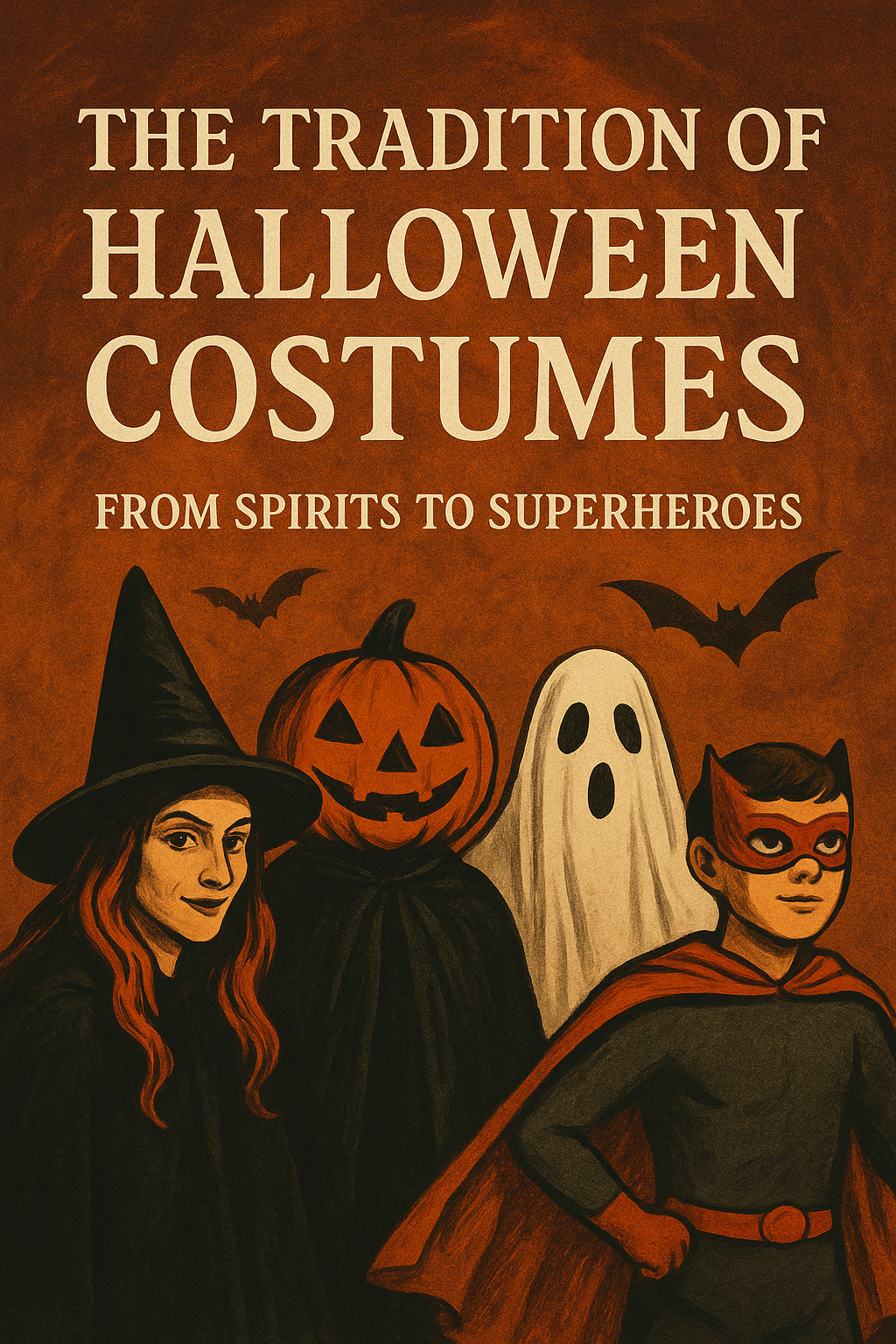
Halloween just wouldn’t be the same without costumes. From the witch hats and ghost sheets of childhood to today’s elaborate cosplay-level creations, dressing up has become the heart of the holiday. But where did this tradition come from? Why do we, every October 31st, slip into masks, capes, and strange disguises? Let’s trace the spooky (and sometimes silly) history of Halloween costumes.
Ancient Roots: Spirits, Samhain, and Disguises
The story begins long before candy buckets and plastic fangs. Halloween’s ancestor, Samhain, was a Celtic festival marking the end of the harvest and the start of the darker half of the year. It was believed that during this time, the veil between the living and the dead was at its thinnest. Spirits, both friendly and mischievous, could cross over into the mortal world.
To avoid being recognized—or harassed—by wandering spirits, people wore animal skins, masks, and disguises. These costumes were a form of protection: if the dead came calling, they might mistake you for one of their own. In a sense, the first Halloween costumes were survival gear against the supernatural.
Medieval Masquerades and “Souling”
As Christianity spread through Europe, many older pagan customs were absorbed into church traditions. During the Middle Ages, we see the rise of “souling”—where the poor went door-to-door on All Hallows’ Eve offering prayers for the dead in exchange for food. These beggars often wore ragged disguises to represent departed souls.
At the same time, mumming and guising—folk traditions involving masks, plays, and pranks—blended with these practices. Dressing up was not just about avoiding spirits anymore; it became a way to perform, entertain, and even beg for treats. Sound familiar?
From Ireland to America
Irish and Scottish immigrants brought these customs to North America in the 19th century. By then, Halloween had become a night of mischief and pranks, especially among rowdy young people. Costumes became part of this trickster culture.
By the early 20th century, Halloween celebrations grew more community-centered, and costumes shifted from simple masks to more elaborate disguises. The first store-bought costumes appeared in the 1930s, often focusing on witches, clowns, skeletons, and devils—classic spooky imagery.
Pop Culture Takes Over
Post–World War II, Halloween exploded in popularity in the United States. With the rise of mass-produced costumes, kids could dress up as their favorite characters from movies, cartoons, and comic books. Suddenly, it wasn’t just about scaring off ghosts—it was about being Batman, Cinderella, or Frankenstein for a night.
Today, Halloween costumes reflect cultural trends as much as tradition. One year it’s vampires, the next it’s superheroes, and the year after that—half the neighborhood is dressed as whatever went viral on the internet last week.
Spiritual Meanings Hidden in the Dress-Up
Even though many people see Halloween costumes as pure fun, the tradition still carries echoes of its spiritual roots:
Disguise as Protection: Just like the Celts, some still believe costumes can hide your true self from unwanted energies. Play and Transformation: Costumes allow us to embody archetypes—witch, hero, monster—helping us explore different parts of ourselves. Honoring the Dead: Traditional ghost or skeleton costumes still remind us of mortality and the thin line between the living and the departed.
Modern Rituals and Personal Practice
If you want to reclaim the spiritual side of Halloween costumes, try these ideas:
Choose with Intention: Pick a costume that reflects a quality or archetype you want to embody for the coming year—strength, mystery, wisdom, playfulness. Ancestor Honoring: Dress as a figure from your ancestry or cultural heritage as a way of remembering and honoring your lineage. Mask Magic: Create your own mask and infuse it with protective symbols or intentions before wearing it out on Halloween night.
Conclusion
Halloween costumes have transformed from ancient disguises against restless spirits into a worldwide tradition of creativity and fun. Whether you’re slipping into a witch’s hat, a movie character, or something entirely unique, you’re participating in a ritual with roots stretching back thousands of years. Every costume, in its own way, carries the spirit of transformation, play, and connection with the unseen.
So when you get dressed up this year, remember—you’re not just putting on a costume. You’re taking part in a tradition that links you to the Celts, the medieval mummers, and every trick-or-treater who’s ever knocked on a door and whispered, “Trick or treat?”
Leave a Reply