
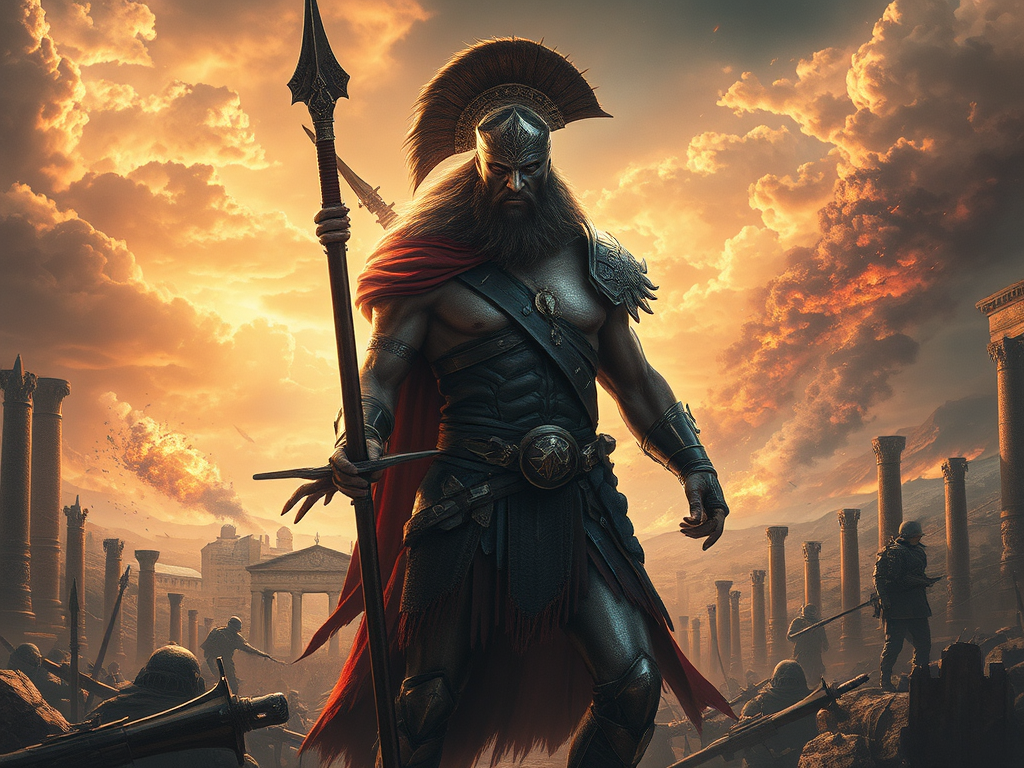
From the blood-soaked battlefields of ancient Greece to the high-stakes conflicts of modern pop culture, Ares, the formidable God of War, has undergone a dramatic transformation. In mythology, he was a chaotic and often disliked figure, embodying the raw brutality of war. But in contemporary media—whether in comics, video games, or blockbuster movies—Ares has taken on a more complex and sometimes even cunning persona. This evolution reflects not only changes in storytelling but also shifts in how we perceive war, power, and divine intervention.
Ares in Ancient Mythology: The Unruly Warrior
In Greek mythology, Ares was the son of Zeus and Hera, but unlike his sister Athena, who represented strategic warfare, Ares embodied war’s violent and chaotic nature. He was impulsive, bloodthirsty, and often a figure of scorn. While he had impressive strength, he lacked wisdom and was frequently outmaneuvered by other gods.
Despite being one of the Olympians, Ares was rarely celebrated. The Greeks often viewed war as a necessary evil, and Ares represented its most destructive aspects. He had numerous love affairs, most famously with Aphrodite, and was the father of several warlike offspring. In Roman mythology, his counterpart, Mars, was more disciplined and revered, often associated with military prowess and the glory of Rome.
From Myth to Modern Media: Ares Reimagined
As storytelling evolved, so did Ares. Modern adaptations have redefined him as more than just a battle-hungry brute. Today, he is often depicted as a cunning manipulator, a shadowy force working behind the scenes to fuel human conflict for his own benefit. Let’s explore some notable portrayals:
Wonder Woman (Comics & Film)
In DC Comics, Ares is one of Wonder Woman’s greatest enemies, embodying the destructive power of war. Unlike his mythological counterpart, this version of Ares is not just a warrior but a master manipulator. In Wonder Woman (2017), Ares, played by David Thewlis, is portrayed as a deceptive force who subtly influences humanity to embrace violence. Rather than charging into battle himself, he orchestrates wars from behind the scenes, embodying a more insidious and strategic approach to conflict.
God of War (Video Game Series)
The God of War franchise presents one of the most memorable modern versions of Ares. In the 2005 game, Ares is a monstrous, power-hungry god who relishes in destruction. His ruthless nature ultimately leads to his downfall when Kratos, a former Spartan warrior, seeks revenge against him. This depiction leans into Ares’ traditional brutality but amplifies it for an epic, action-packed narrative. Here, Ares is less of a tactician and more of an apocalyptic force of destruction.
Marvel Comics & Other Media
In Marvel Comics, Ares is sometimes depicted as an antihero rather than a pure villain. He retains his love for battle but occasionally fights alongside heroes when their goals align. Unlike other versions, this Ares possesses a warrior’s code, making him more than just a mindless warmonger.
Why Has Ares Changed?
These modern portrayals reflect shifting cultural attitudes toward war and power. In ancient times, war was an inescapable reality, and Ares was a necessary, albeit undesirable, part of that reality. Today, war is often seen as something influenced by political agendas, making a manipulative and cunning Ares more fitting for contemporary narratives.
Additionally, modern storytelling embraces complex villains. Audiences appreciate antagonists with depth and motives beyond sheer destruction. By turning Ares into a master manipulator rather than just a bloodthirsty warrior, writers make him more compelling and relevant.
The Lasting Legacy of Ares
Despite his ancient origins, Ares continues to be a powerful symbol of war and conflict in modern media. His evolution from a reckless brute to a strategic mastermind mirrors our own changing understanding of war—from chaotic clashes to calculated power struggles.
What’s your favorite version of Ares? Do you prefer the traditional mythological god, or do you enjoy his modern, more complex interpretations? Let us know in the comments, and share your favorite portrayals of gods in pop culture!
Leave a Reply