
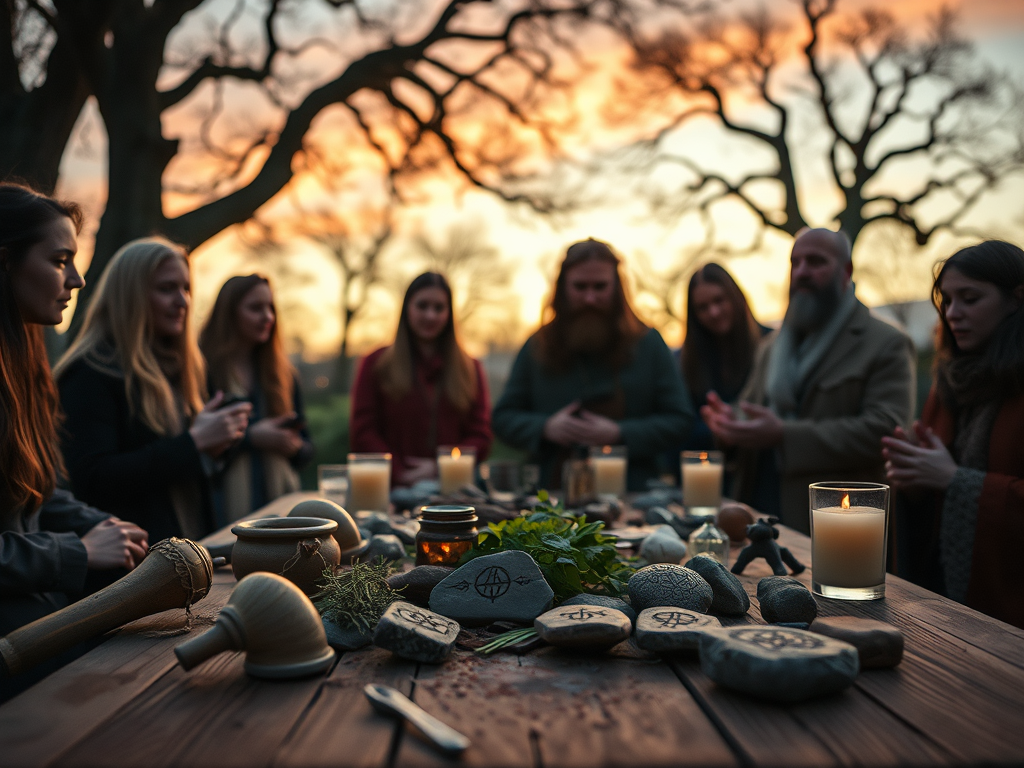
Have you ever wondered what lies beneath the surface of Germanic tribal religion? While most people know Theodism involves tribes and ancient Germanic gods, there’s a fascinating world of deeper practices and beliefs that rarely gets discussed. Today, we’re going to peek behind the curtain and explore some of the more intriguing aspects of this unique spiritual path.
The Web of Fate Isn’t What You Think
When most people hear about wyrd (fate) in Germanic traditions, they think of it as a simple “what’s meant to be will be” concept. But in Theodish practice, it’s far more interesting than that. Think of wyrd as a cosmic game of dominoes, but one where you can actively influence how the pieces fall.
Every action you take creates ripples, not just in your own life, but in your entire community’s future. Theodish practitioners call this “well-spring wyrd” – imagine it as a pool of luck and possibility that your whole tribe shares and builds together. Your ancestors’ actions are still creating waves in this pool, and your choices today will affect generations to come.
The Tribe Has a Soul (No, Really!)
Here’s something mind-bending: Theodish believers work with the concept of a “tribal soul” – a spiritual entity that’s bigger than any individual member. It’s like a group consciousness that carries the tribe’s accumulated experiences, luck, and spiritual power.
Think of it like a shared spiritual bank account that everyone in the tribe contributes to and draws from. The cool part? This tribal soul needs maintenance through ritual and right action, just like you need to maintain a garden to keep it healthy.
Rituals: There’s More Than Meets the Eye
Theodish rituals aren’t just people standing around making offerings (though that’s part of it). They’re working on three levels simultaneously:
- The physical stuff you can see – offerings, gestures, and actions
- The social bonds being strengthened between tribe members
- The spiritual work happening behind the scenes
Take their drinking rituals (called symbel) for example. When someone raises a horn to make a toast, they’re not just sharing a drink. They’re working with ancient concepts of word-power, weaving fate, and even reading omens in the mead itself. It’s like a spiritual technology that’s been refined over centuries.
The Hidden Side of Hierarchy
Remember how Theodish groups have ranks like thralls and thanes? There’s actually a whole mystery tradition built into these roles. Being a thrall isn’t just about serving – it’s an initiatory path where you learn to understand power through serving others. Think of it like martial arts, where you have to master the basics before learning the advanced techniques.
Thanes (the warrior-leaders) aren’t just administrators. They’re trained in specialized practices like:
- Managing the tribe’s collective luck
- Protecting spiritual boundaries
- Understanding complex gift-giving cycles that build power
- Working with warrior mysteries that go way beyond physical combat
Gods, Souls, and Multiple Worlds
Theodish cosmology gets pretty wild when you dig into it. They work with a model of nine worlds, but not just as physical places. These worlds are understood as different states of consciousness, levels of reality, and centers of power that can be accessed through ritual.
Their relationship with gods goes deeper than just worship too. Advanced practitioners learn to work with god-poles (sacred pillars), manage divine energy, and read patterns of divine influence in the world around them.
Bringing It Into the Modern World
One of the most fascinating challenges Theodish practitioners face is adapting these ancient practices to modern life. How do you maintain a tribal structure when your members are spread across different cities? How do you work with land spirits when some of your rituals have to happen online?
These aren’t just practical problems – they’re theological puzzles that practitioners are actively working to solve. It’s like trying to translate an ancient text into modern language while keeping all the original meaning intact.
Why This Matters
Even if you’re not interested in practicing Theodism, understanding these deeper aspects gives us insight into how our ancestors might have viewed the world. It shows us that what often gets dismissed as “primitive religion” actually contains sophisticated systems of spiritual and social technology.
These practices raise interesting questions for all of us: How do our actions affect our communities? What does it mean to be part of something bigger than ourselves? How do we balance ancient wisdom with modern needs?
Want to Learn More?
If you’re intrigued by these deeper aspects of Theodish practice, the best way to learn more is to:
- Study the historical sources
- Connect with existing Theodish communities
- Learn some Old English or Old Norse
- Start exploring the basic practices
Remember, these advanced concepts grow out of careful practice of the basics. Like any deep spiritual tradition, understanding comes through experience more than just reading about it.
Have you encountered any similar concepts in other spiritual traditions? Let me know in the comments below!
This post barely scratches the surface of Theodish practice, but hopefully it’s given you a glimpse into the fascinating depth of this tradition. Stay tuned for more deep dives into different aspects of Germanic spiritual practices!
Leave a Reply