

Introduction
Many spiritual traditions view the natural world as alive with meaning and energy. Among the most widely recognized symbolic frameworks in pagan spirituality is the concept of the four classical elements: earth, air, fire, and water. These elements represent both physical aspects of nature and deeper spiritual qualities connected to balance, transformation, and awareness.
In ritual practice, elemental invocation is the act of acknowledging or inviting the symbolic presence of these elements into a sacred space. For beginners, this practice can seem mysterious or complicated, but it is actually one of the most accessible forms of ritual work.
Elemental invocation does not require elaborate tools or complex ceremony. At its heart, it is simply a way of recognizing the natural forces that shape our world and inviting their symbolic qualities into a moment of reflection or spiritual focus.
This guide introduces the basic ideas behind elemental invocation and offers a simple ritual structure suitable for beginners.
Understanding the Four Classical Elements
Across many ancient cultures, the world was understood through the interplay of elemental forces. Greek philosophers such as Empedocles described the universe as composed of four foundational elements: earth, air, fire, and water. Variations of this concept appear in many traditions, including alchemy, Hermetic philosophy, and modern pagan spirituality.
Each element carries symbolic meanings that extend beyond its physical form.
Earth represents stability, grounding, and physical presence. It is associated with mountains, soil, stone, and the enduring strength of the natural world.
Air symbolizes thought, breath, communication, and awareness. The invisible movement of air reflects the movement of ideas and inspiration.
Fire represents transformation, energy, and will. Fire can illuminate, warm, and reshape the world through its dynamic power.
Water is associated with emotion, intuition, and adaptability. Rivers, oceans, and rain remind us of the constant flow of change.
In ritual practice, these elements are not typically viewed as literal spirits being summoned. Instead, they are often understood as symbolic forces that help focus intention and awareness.

Why Elemental Invocation Is Used in Ritual
Elemental invocation serves several purposes in spiritual practice.
First, it helps create a sense of sacred structure. By acknowledging each element, a ritual space becomes symbolically connected to the natural world.
Second, it encourages balance. Each element represents different aspects of human experience—physical stability, mental clarity, emotional depth, and personal energy. Recognizing them together reminds practitioners that spiritual growth often involves harmony between these forces.
Finally, elemental invocation can help focus the mind. Ritual actions such as lighting a candle or touching a bowl of water create small moments of mindfulness that bring attention to the present.
For beginners, these simple actions can transform an ordinary moment into a meaningful spiritual experience.
A Simple Beginner Elemental Invocation Ritual
Elemental invocation rituals can vary widely depending on tradition. However, a very simple structure works well for beginners.
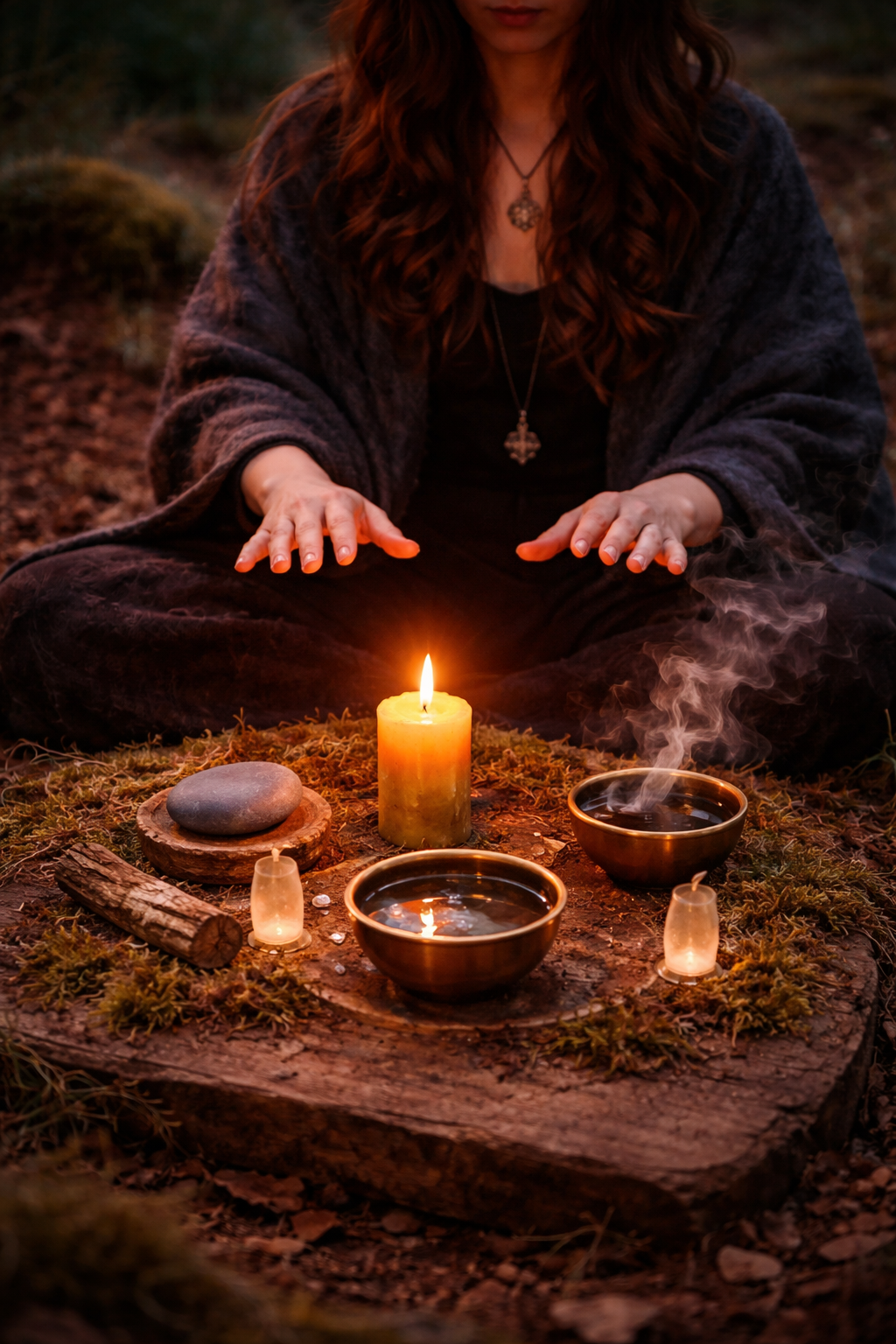
You can perform this ritual indoors or outdoors. If possible, gather small objects representing each element:
- Earth: a stone, soil, or crystal
- Air: incense, a feather, or simply breath
- Fire: a candle
- Water: a small bowl of water
Arrange the items in front of you or on a small table.
Take a moment to breathe slowly and settle your attention.
Step 1: Acknowledge Earth
Touch the stone or earth before you.
Reflect on stability, grounding, and the physical world that supports life.
You might say quietly:
“Earth, foundation of life, I honor your strength and stability.”
Pause for a moment and feel your connection to the ground beneath you.
Step 2: Acknowledge Air
Light incense or simply take a slow breath.
Notice the movement of air around you.
You might say:
“Air, breath of inspiration and clarity, I welcome your presence.”
Take a moment to notice your thoughts becoming calm and focused.
Step 3: Acknowledge Fire
Light the candle.
Observe the flame for a few seconds.
You might say:
“Fire, spark of energy and transformation, I honor your light.”
Allow the flame to remind you of motivation, creativity, and personal will.
Step 4: Acknowledge Water
Touch the bowl of water gently.
You might say:
“Water, flowing source of emotion and intuition, I honor your depth.”
Reflect on the movement and adaptability of water.

Closing the Ritual
When you feel ready, take another slow breath and simply acknowledge the space you have created.
Some people like to thank the elements before finishing:
“Earth, Air, Fire, and Water, thank you for your presence and balance.”
You may extinguish the candle and incense, signaling the end of the ritual.
The entire practice may only take a few minutes, but even a brief ritual can create a meaningful moment of awareness.
Elemental Invocation as a Personal Practice
Over time, elemental invocation can become a flexible and personal practice.
Some people include it at the beginning of meditation. Others use it as part of seasonal celebrations, journaling sessions, or moments of reflection during important life transitions.
What matters most is not the exact words or tools used, but the intention behind the practice. Elemental symbolism offers a way to connect inner experience with the rhythms of the natural world.
By recognizing earth beneath our feet, air in our breath, fire in our energy, and water in our emotions, we begin to see ourselves as part of the larger balance of nature.

Conclusion
Elemental invocation is one of the simplest ritual practices found in pagan spirituality. By acknowledging the symbolic forces of earth, air, fire, and water, practitioners create a moment of balance and reflection.
For beginners, this practice offers an approachable introduction to ritual work without requiring complex tools or formal training.
At its heart, elemental invocation is simply a reminder that the natural world and human experience are deeply connected. Through small acts of awareness, we can learn to recognize the elemental patterns that shape both nature and our inner lives.
Leave a Reply