
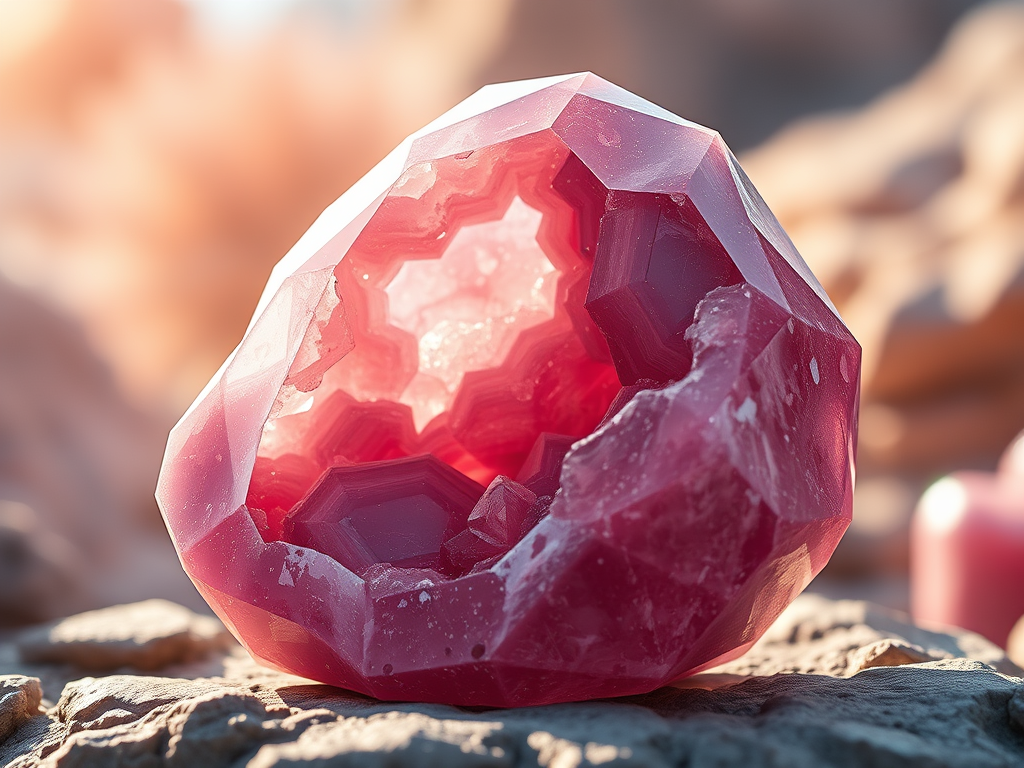
Rhodochrosite is one of the most emotionally potent stones in the crystal world. With its soft pink bands and warm, comforting energy, it has long been associated with love, healing, compassion, and the deep work of the heart. Yet unlike the gentle sweetness of rose quartz, rhodochrosite carries a more active, transformative energy. This is a stone that does not simply comfort the heart—it teaches it, strengthens it, and asks it to grow.
In spiritual practice, rhodochrosite is often called the Stone of the Compassionate Heart or the Stone of Emotional Healing. It is deeply connected to self-love, inner child healing, forgiveness, and the courage to face the emotional truths we would often prefer to avoid.
This post explores the meaning of rhodochrosite, its energetic correspondences, and practical ways to work with it in spiritual practice.

What Is Rhodochrosite?
Rhodochrosite is a manganese carbonate mineral known for its distinctive pink, rose, and raspberry-colored bands. These bands form naturally over time, layer by layer, which mirrors the way emotional experiences accumulate within us. This visual symbolism is one of the reasons rhodochrosite is so strongly associated with emotional healing and inner work.
Historically, rhodochrosite has been treasured in South American spiritual traditions, particularly in Argentina, where it is the national gemstone. In some traditions it is known as Inca Rose, and legends describe it as the crystallized blood of ancient rulers—symbolizing the heart, vitality, and emotional legacy passed through generations.
Energetically, rhodochrosite is most strongly connected to the heart chakra, though many practitioners also experience its influence in the solar plexus, where personal power and emotional identity live.
The Core Spiritual Meaning of Rhodochrosite
At its core, rhodochrosite represents:
- Emotional healing
- Compassion (for self and others)
- Inner child work
- Self-worth and self-love
- Forgiveness and release
- Joy and emotional resilience
This is not a passive stone. Rhodochrosite invites active emotional growth. It helps bring buried emotions to the surface so they can be acknowledged, processed, and released.
Where some stones soothe, rhodochrosite transforms.
Rhodochrosite and the Courage to Feel
Many spiritual paths emphasize transcendence, detachment, or rising above emotional suffering. Rhodochrosite offers a different path. It teaches that emotional healing happens through feeling, not avoiding.
This stone supports the idea that:
- Pain deserves attention
- Joy deserves space
- Emotional truth deserves honesty
- Healing requires compassion
Rhodochrosite helps dissolve emotional numbness and encourages openness. It gently pushes us to reconnect with the full spectrum of human emotion—both the light and the shadow.
Because of this, working with rhodochrosite can sometimes feel intense. It may bring memories, feelings, or realizations to the surface. This is part of its purpose: healing begins with awareness.
Emotional Healing and Inner Child Work
Rhodochrosite is particularly associated with inner child healing.
The “inner child” represents the emotional memories and patterns formed in early life. Many of our fears, self-doubts, and emotional triggers originate in childhood experiences. Rhodochrosite’s energy helps create a safe emotional space to reconnect with this part of the self.
Practitioners often use rhodochrosite to support work involving:
- Childhood wounds
- Emotional neglect or abandonment
- Self-worth issues
- Fear of vulnerability
- Patterns of self-sabotage
This stone encourages gentleness and compassion toward past versions of ourselves. It reminds us that healing is not about blame—it is about understanding.

Rhodochrosite and Self-Love
Self-love is often misunderstood as simple positivity or confidence. In spiritual practice, self-love is deeper. It involves:
- Accepting imperfections
- Acknowledging emotional needs
- Practicing self-compassion
- Setting healthy boundaries
Rhodochrosite strengthens this form of self-love. It helps dissolve internalized shame and harsh self-criticism. Many people find it especially helpful during periods of personal growth, therapy, or deep reflection.
This stone supports the shift from asking:
“Why am I like this?”
to asking:
“What do I need to heal?”
Rhodochrosite and Forgiveness
Forgiveness is a major theme in rhodochrosite work.
This includes:
- Forgiving others
- Forgiving ourselves
- Releasing resentment
- Letting go of emotional baggage
Forgiveness does not mean excusing harmful behavior. Instead, it means freeing ourselves from the emotional weight of the past. Rhodochrosite helps loosen the emotional grip of old wounds so they no longer define the present.
It encourages emotional release, not emotional suppression.
Joy, Playfulness, and Emotional Renewal
Although rhodochrosite is known for deep emotional work, it is equally associated with joy and playfulness.
Once emotional blockages begin to clear, space opens for:
- Creativity
- Spontaneity
- Emotional lightness
- A renewed sense of wonder
This is why rhodochrosite is often called a stone of the joyful heart. It helps reconnect us with the ability to experience happiness without guilt or fear.
Correspondences in Spiritual Practice
Chakras:
- Heart chakra (primary)
- Solar plexus chakra (secondary)
Elements:
- Water (emotions, healing)
- Fire (personal transformation)
Planetary association:
- Venus (love, compassion, relationships)
Common intentions:
- Emotional healing
- Self-love rituals
- Forgiveness work
- Relationship healing
- Trauma recovery support
- Heart-centered meditation
Ways to Work With Rhodochrosite
1. Meditation for Emotional Healing
Hold rhodochrosite over your heart during meditation. Focus on slow breathing and visualize soft pink light expanding outward from your chest.
Simple reflection questions for meditation:
- What emotion needs attention today?
- What part of me needs compassion?
- What am I ready to release?
This practice is especially powerful during times of emotional transition.
2. Journaling With Rhodochrosite
Rhodochrosite pairs beautifully with reflective journaling. Keep the stone nearby while writing about emotions, memories, or personal growth.
Prompts to explore:
- What does my heart need right now?
- Where am I being too hard on myself?
- What would forgiveness look like for me?
The stone’s energy helps create a sense of safety and openness during introspection.
3. Heart-Centered Ritual Work
Rhodochrosite is ideal for rituals focused on:
- Self-love
- Emotional release
- Healing relationships
- Letting go of the past
A simple ritual may include:
- Lighting a candle
- Holding the stone
- Speaking intentions aloud
- Writing and releasing old emotional patterns
The goal is not perfection, but emotional honesty.
4. Carrying Rhodochrosite Daily
Wearing or carrying rhodochrosite allows its energy to support emotional balance throughout the day. Many practitioners use it when:
- Navigating difficult conversations
- Processing grief or change
- Building confidence and self-worth
- Practicing emotional boundaries
It serves as a gentle reminder to approach yourself and others with compassion.
When to Reach for Rhodochrosite
You may feel drawn to rhodochrosite when:
- You are working through past emotional wounds
- You feel disconnected from joy
- You are learning to love yourself more deeply
- You are ready to release resentment or guilt
- You want to strengthen emotional resilience
This stone often appears during times of emotional transformation.
Final Thoughts
Rhodochrosite is not a stone of avoidance. It is a stone of courage.
It encourages us to face our emotional world with honesty, compassion, and gentleness. It teaches that healing is not about becoming someone new—it is about embracing every version of who we have been and allowing growth to unfold from that acceptance.
Working with rhodochrosite is an invitation to treat the heart as sacred space. A place worthy of patience, kindness, and care.
In a spiritual practice centered on growth and self-understanding, rhodochrosite reminds us that compassion begins within—and from that center, it radiates outward into the world.
Leave a Reply