
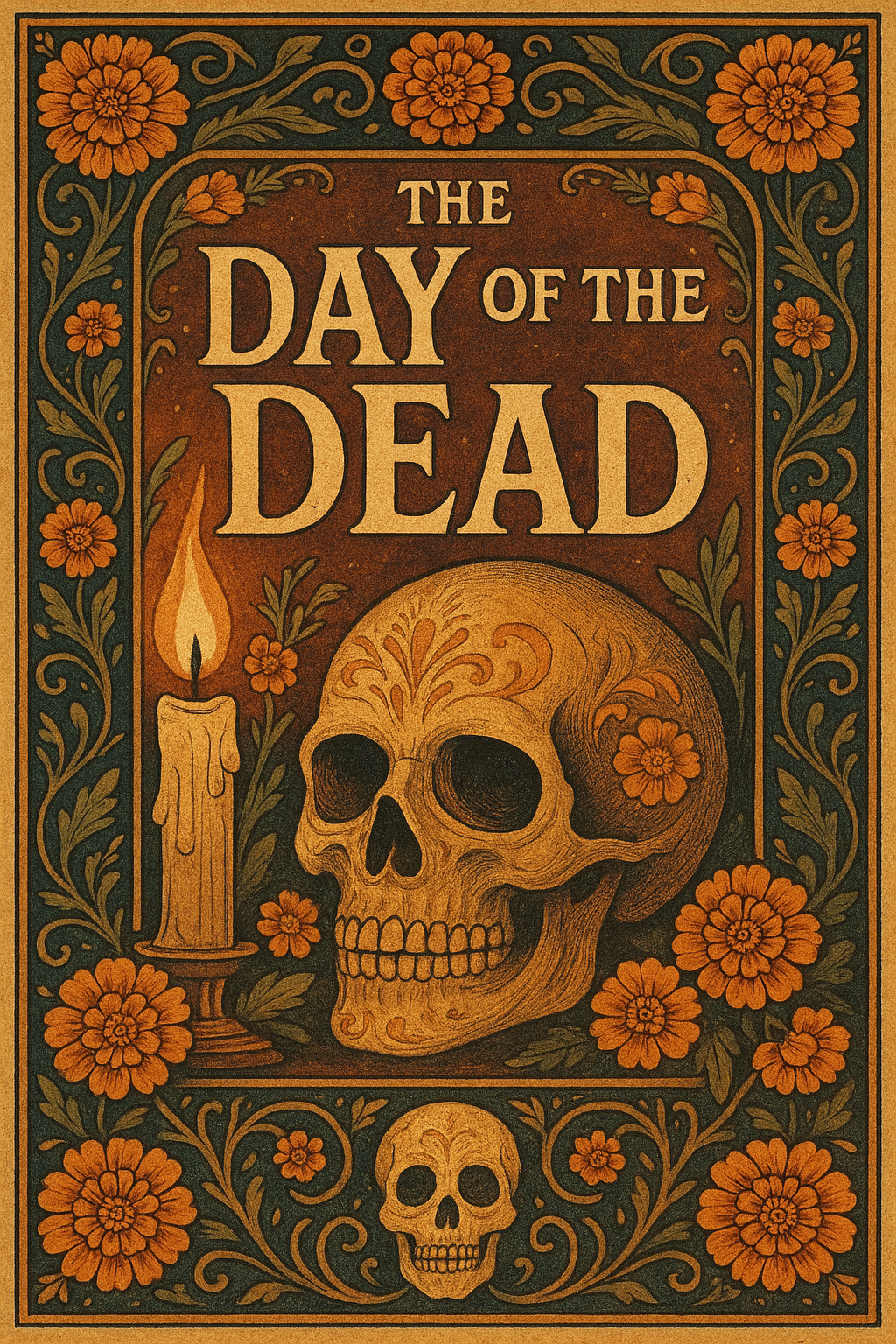
When autumn arrives and the veil between worlds grows thin, something magical happens across cultures. While Pagans celebrate Samhain, millions throughout Latin America—especially in Mexico—honor Día de los Muertos, the Day of the Dead.
This isn’t a somber funeral. It’s a vibrant celebration filled with music, color, food, and love. Death isn’t an ending here—it’s a transformation, a continuation of the eternal bond between the living and those who came before.
If you’ve ever been curious about this beautiful tradition, or wondered how to honor your own ancestors with respect and authenticity, this guide will walk you through everything you need to know.
What Is Día de los Muertos?
Día de los Muertos (Day of the Dead) is a Mexican holiday celebrated primarily on November 1st and 2nd. Families welcome the spirits of deceased loved ones back to the world of the living through colorful altars, favorite foods, and joyful remembrance.
Key dates:
- November 1st (Día de los Inocentes): Honoring children and infants who have passed
- November 2nd (Día de los Muertos): Honoring deceased adults
Unlike Halloween, which embraces spooky themes, Día de los Muertos celebrates the continuation of relationships beyond death. It’s based on the belief that the dead are still part of the community, kept alive through memory and love.
The Ancient Origins: Before the Spanish Arrived
Día de los Muertos has roots that stretch back over 3,000 years to the Aztec, Toltec, and other Indigenous Mesoamerican peoples.
Pre-Columbian Death Beliefs
Ancient Nahua cultures didn’t fear death—they saw it as a natural part of life’s cycle. The Aztecs believed souls journeyed through nine challenging levels of Mictlan (the underworld) before reaching their final resting place.
Mictecacihuatl: The Lady of the Dead
At the heart of these ancient beliefs was Mictecacihuatl (pronounced meek-teh-kah-see-waht), the goddess who presided over Mictlan alongside her consort Mictlantecuhtli. She wasn’t a figure of terror but of balance and renewal.
In Aztec creation mythology, the gods ground up bones from Mictlan and mixed them with divine blood to create humanity. Mictecacihuatl, as the keeper of these bones, became a mother of life through death itself.
How Catholic Traditions Merged with Indigenous Practices
When Spanish colonizers arrived in the 16th century, they attempted to replace indigenous rituals with Catholic holidays like All Saints’ Day (November 1st) and All Souls’ Day (November 2nd).
But the indigenous people didn’t abandon their traditions. Instead, they blended them with Catholic observances, creating a unique syncretic tradition that honored both their ancestors and their survival. This fusion wasn’t entirely voluntary—it was born from colonization—but it resulted in the vibrant celebration we know today.
Symbols and Meanings: The Language of Día de los Muertos
Every element of a Day of the Dead celebration carries deep significance. Here’s what each symbol means:
Essential Symbols
🌼 Marigolds (Cempasúchil)
These bright orange flowers are called “flowers of the dead.” Their vibrant color represents the sun, and their strong scent is believed to guide spirits from the cemetery to their family’s altar.
💀 Sugar Skulls (Calaveras de Azúcar)
Colorfully decorated skulls made from sugar, often personalized with names. They remind us that death is sweet, not bitter—part of life’s natural cycle. They’re often whimsical rather than scary, showing that death doesn’t have to be grim.
🕯️ Candles and Incense
Each candle represents a soul and lights the path between worlds. The glow helps spirits find their way home, while copal incense purifies the space and carries prayers to the heavens.
🍞 Pan de Muerto (Bread of the Dead)
This special sweet bread is shaped like a bun with bone-shaped decorations on top. The round shape represents the cycle of life, while the “bones” honor the departed. It’s dusted with sugar and often flavored with orange blossom.
📸 Photographs and Personal Items
Pictures anchor memories and help spirits recognize their loved ones. Personal belongings—a favorite hat, jewelry, or tool—strengthen the connection between the living and the dead.
🎨 Papel Picado (Perforated Paper)
Delicate tissue paper banners cut into intricate designs. They represent the fragility of life and the element of air, which carries souls between realms.
💧 Water
Spirits arrive thirsty from their journey, so a glass of water is always provided to refresh them.
The Ofrenda: Creating a Sacred Altar
The centerpiece of Día de los Muertos is the ofrenda—an altar created to welcome spirits home.
Traditional Ofrenda Elements
A complete ofrenda typically includes:
- Photos of the deceased
- Marigolds to guide spirits with color and scent
- Candles to light the way
- Water to quench their thirst
- Salt to purify and preserve the soul
- Pan de muerto and other foods the deceased enjoyed
- Favorite drinks (sometimes including alcohol)
- Personal items that belonged to or remind you of the person
- Papel picado decorating the space
- Copal incense for purification
Ofrendas are often arranged on multiple levels, representing the layers of existence between earth and the spirit world.
Día de los Muertos vs. Samhain: Similar Spirit, Different Expression
Many Pagans and spiritual seekers notice the similarities between Día de los Muertos and Samhain (October 31st–November 1st). Both occur when the veil between worlds is thinnest. Both honor ancestors and acknowledge death’s role in the cycle of life.
Key Differences
Samhain leans into mystery, shadow work, and the dark half of the year. It’s introspective and often solemn.
Día de los Muertos turns toward celebration, color, and community. Death is welcomed with joy, music, and laughter.
Both are valid, beautiful traditions. The difference lies in cultural context and expression, not in the depth of reverence for the dead.
How to Honor Your Ancestors Respectfully
If you’re drawn to the wisdom of Día de los Muertos but aren’t Mexican or of Mexican heritage, you can still honor your ancestors without appropriating another culture.
Respectful Ways to Honor the Dead
1. Build Your Own Ancestral Altar
Create an altar focused on your lineage and loved ones:
- Use photographs of family members and friends who’ve passed
- Include candles to represent their spirits
- Add items that were meaningful to them (a favorite book, tool, or trinket)
- Offer foods or drinks they enjoyed
- You may include a marigold or sugar skull as symbols of universal reverence for the dead, but keep your focus on your own ancestors
2. Cook Family Recipes
Food carries ancestral memory. Prepare dishes from your cultural background or recipes passed down through your family. Each flavor is a bridge between generations.
3. Tell Their Stories
The dead don’t need perfection—they need remembrance. Share the funny stories, the flawed humanity, the real people they were. Speak their names aloud. In many traditions, a person dies twice: once when their body dies, and once when their name is spoken for the last time.
4. Visit Gravesites
If possible, visit cemeteries where your loved ones are buried. Bring flowers, clean the headstones, sit quietly. Speak to them as if they can hear you—because in the energetic sense, they can.
5. Journal or Write Letters
Write to your deceased loved ones. Tell them what’s happened since they left, what you’ve learned, what you miss. You don’t need to send these letters—the act of writing creates connection.
6. Practice Death Meditation
Reflect on your own mortality. In Pagan practice, death is the Great Initiator. Consider: What parts of yourself need to die so something new can grow? What do you want to be remembered for?
The Spiritual Meaning: Death as Transformation
From a spiritual perspective, Día de los Muertos teaches us that death is not an enemy—it’s a transformation.
Elemental Connections
🔥 Fire burns in every candle, representing consciousness, memory, and the eternal spark of spirit.
🌍 Earth holds the bones, flowers, and offerings—the ground of remembrance where both bodies and stories are planted.
💧 Water flows through tears, offerings, and the cups placed on altars for thirsty spirits.
🌬️ Air carries prayers, the scent of marigolds, and the smoke of incense between worlds.
✨ Spirit (the fifth element) moves between them all, reminding us that connection transcends physical death.
Working with Mictecacihuatl: Respectful Deity Work
If you’re drawn to Mictecacihuatl as a deity, approach her with deep respect. She is not a Halloween costume or aesthetic—she’s a sacred figure from a living culture.
Who Can Work with Her?
Anyone who approaches with genuine reverence can connect with Mictecacihuatl, but always:
- Research her mythology thoroughly
- Acknowledge her cultural context
- Never use her image superficially or for “witchy aesthetic”
- Understand you’re working with cycles of death and rebirth—this is serious transformational work
How to Honor Mictecacihuatl
- Create an altar space specifically for her during late October/early November
- Offer marigolds, copal incense, water, and pan de muerto
- Speak to her about your fears of death and your desire to understand life’s cycles
- Ask her to help you honor your ancestors appropriately
- Meditate on bones, transformation, and what must die within you to create space for growth
Cultural Appreciation vs. Appropriation: Know the Difference
Cultural Appreciation:
- Learning about the tradition with respect
- Honoring your own ancestors using elements that resonate with you
- Acknowledging the Mexican origin of symbols you’re drawn to
- Supporting Mexican artists and businesses
Cultural Appropriation:
- Wearing sugar skull makeup as a costume without understanding
- Throwing a “Day of the Dead party” with tequila and sombreros
- Using sacred imagery for fashion or decoration without context
- Profiting from the culture without giving back
The golden rule: Focus on the spirit of honoring the dead within your own ancestry and practice, rather than imitating Mexican traditions.
Día de los Muertos Celebrations Around the World
While Día de los Muertos is primarily Mexican, similar traditions exist globally:
- Japanese Obon: Summer festival honoring ancestral spirits with lanterns and dances
- Chinese Qingming Festival: Spring tomb-sweeping and ancestor veneration
- Celtic Samhain: Acknowledging the veil’s thinning and honoring the dead
- Philippines Undas: Families camp overnight in cemeteries with food and candles
- Malagasy Famadihana: Rewrapping ancestors’ remains and dancing with them
These similarities show a universal human truth: love transcends death, and honoring those who came before us is sacred work.
Create Your Own Ancestor Honoring Practice
You don’t need to celebrate Día de los Muertos specifically to honor your dead. Here’s how to create your own meaningful practice:
Simple Ancestor Altar Setup
- Choose a space (shelf, table, windowsill)
- Add photos of deceased loved ones
- Light a candle weekly or when you think of them
- Include offerings: water, flowers, or items they loved
- Speak to them regularly—share your life, ask for guidance
- Keep it evolving—add new photos, change offerings seasonally
Annual Ancestor Ritual (Late October/Early November)
- Clean and refresh your altar
- Cook a family recipe
- Tell stories about the deceased
- Light candles for each person you’re honoring
- Speak their names aloud
- Sit in meditation, opening yourself to their presence
- Journal any messages, feelings, or memories that arise
Reflection Questions for Your Practice
Take time to contemplate:
- What stories of my ancestors still live through me?
- Which fears about death need to be transformed into wisdom?
- How do I want to be remembered when I cross the veil?
- What gifts did the deceased give me that I can pass forward?
- What parts of myself need to “die” to make space for new growth?
Write your answers. Speak them aloud. These reflections deepen your relationship with both your ancestors and your own mortality.
The Universal Truth: Love Never Dies
Whether you celebrate Samhain, Día de los Muertos, Obon, or your own ancestor honoring practice, the truth remains the same: love transcends death.
Grief isn’t the opposite of joy—it’s the proof that love existed. When we decorate altars, speak names into the wind, or light candles in remembrance, we’re declaring that connection endures beyond the physical world.
This is the deepest magic: no one is truly gone while their story continues to be told.
A Simple Practice to Start Tonight
Light a single candle. Place beside it something that reminds you of someone you’ve loved and lost—a photograph, a piece of jewelry, a flower.
Speak their name.
Tell them what you’ve learned since they left. What you’ve survived. What still hurts. What makes you laugh.
Then sit quietly and listen.
Because honoring the dead isn’t just about remembrance—it’s about relationship. And when you open your heart, you might hear them whisper back:
“We’re still here. We always were.”
Final Thoughts
Día de los Muertos teaches us that death doesn’t have to be feared. It can be honored, celebrated, and woven into the fabric of life with color, joy, and love.
Whether you’re Mexican, Pagan, or simply someone who wants to honor those who came before, the spirit of this tradition offers profound wisdom: our ancestors are never truly gone. They live in our stories, our memories, our traditions, and our DNA.
This season, as the veil thins and the air grows crisp, take time to remember. Light a candle. Speak a name. Share a meal.
Welcome your beloved dead home.
How do you honor your ancestors? What traditions help you feel connected to those who’ve passed? Share your thoughts and practices in the comments below.
Leave a Reply