
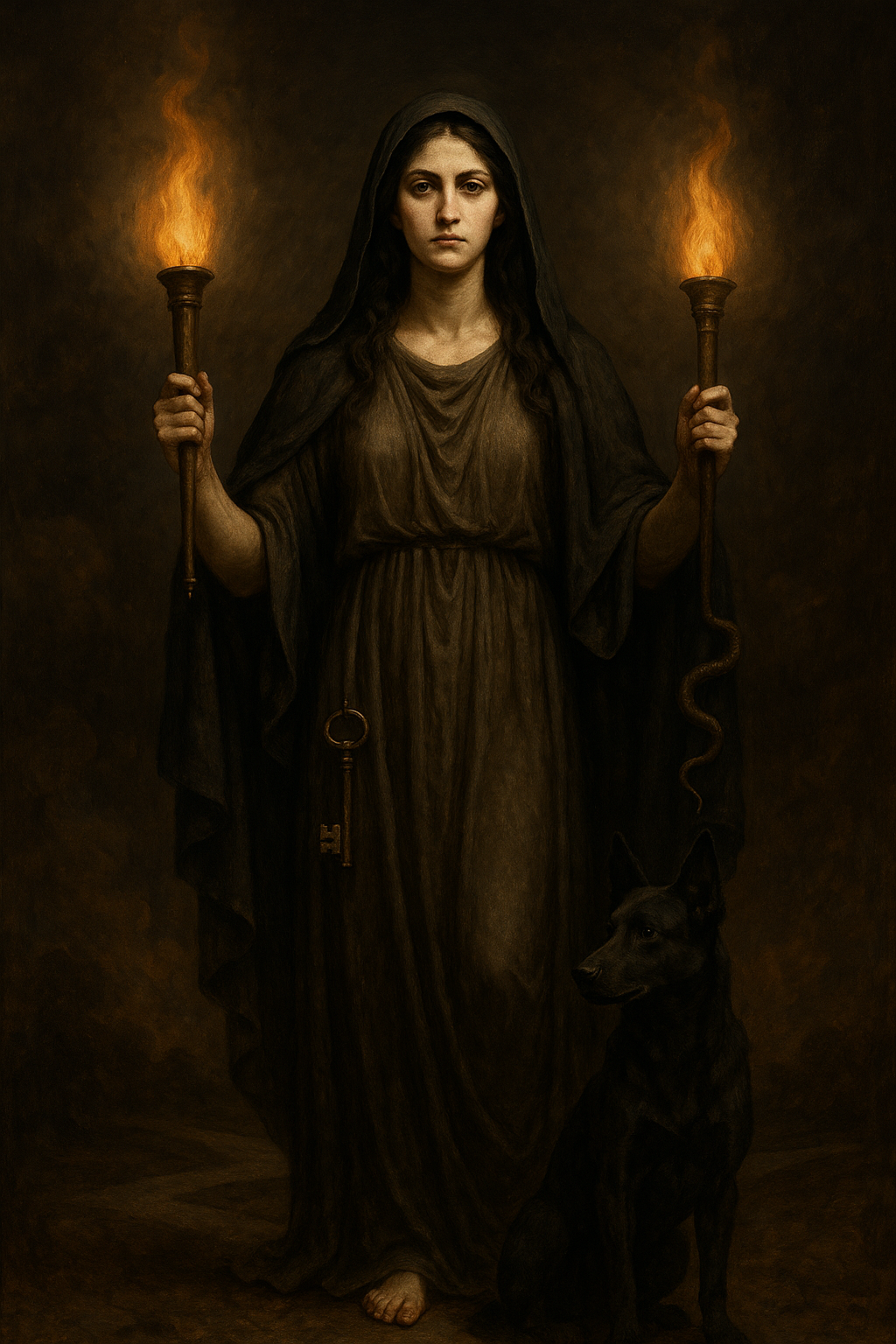
When it comes to modern Paganism and witchcraft, few deities have captured attention quite like Hekate—sometimes spelled Hecate. Known as the torchbearer, guardian of the crossroads, and queen of spirits, she has become a central figure for witches, mystics, and spiritual seekers alike. But who is Hekate really, and why does she remain so powerful in today’s practice? Let’s dive into her history, her mythology, and the many ways she continues to guide practitioners today.
Who Is Hekate?
Hekate is a goddess from the ancient Greek pantheon, though her worship likely predates Greece and may trace back to Anatolia or Thrace. Unlike many deities who had their domains narrowed over time, Hekate’s sphere of influence remained vast. She was associated with:
Magic and Witchcraft – Hekate is one of the primary figures tied to sorcery and spells in Greek literature. Crossroads – She presided over liminal spaces: thresholds, boundaries, and transitions. The Underworld – While not a chthonic deity in the same way as Hades or Persephone, she guided spirits and stood as a psychopomp. Protection – Families placed shrines to Hekate at their doorways, asking her to ward off evil.
In Hesiod’s Theogony (8th century BCE), she is described as a goddess honored by Zeus himself, gifted with power over sky, sea, and earth. Later texts, particularly the Greek Magical Papyri, solidify her as a patroness of spells and invocations.
Hekate in Ancient Practice
The Greeks often worshipped Hekate at crossroads, particularly three-way crossroads, which symbolized her dominion over choices and fate. Offerings called deipna (suppers) were left for her at the dark moon—usually consisting of bread, fish, eggs, garlic, and sometimes small cakes.
Hekate was also a liminal protector. Families placed small statues, known as Hekataia, at thresholds or outside their homes. These triple-formed statues often depicted Hekate with three faces, watching every direction at once.
In literature, she is deeply tied to magic. The most famous reference comes from Medea, the sorceress who called upon Hekate’s power in her spells. This association forever linked her to witchcraft.
Modern Pagan Views of Hekate
In today’s Pagan and witchcraft communities, Hekate/Hecate has become one of the most worked-with deities. She is seen as a guide for those walking liminal paths—whether that means shadow work, necromancy, divination, or simply navigating personal transitions.
Modern practitioners honor her as:
Guardian of Witches – Many witches call her their patron goddess. Torchbearer of Truth – She lights the way through darkness and uncertainty. Psychopomp – She can guide spirits of the dead, but also help the living navigate metaphorical deaths and rebirths. Protector – Many call upon her to shield their homes and magical work.
Her worship has experienced a revival, with entire traditions—such as Hekatean witchcraft—built around her.
Symbols and Sacred Associations
Like most deities, Hekate has specific symbols and correspondences that make it easier to recognize her influence:
Torches – She is often shown holding twin torches, guiding seekers through the dark.
Keys – Symbol of her role as gatekeeper to mysteries.
Dogs – Particularly black dogs; their howls were thought to announce her presence.
Snakes – Representing rebirth and the underworld.
Crossroads – Both literal and symbolic; choices, thresholds, and turning points.
Colors often linked to her: black, silver, deep purple, and sometimes gold (as the light of her torches).
Herbs and plants: garlic, yew, mandrake, mugwort, and willow.
Crystals: obsidian, moonstone, labradorite.
Working with Hekate in Modern Practice
If you feel drawn to Hekate, there are many ways to begin working with her respectfully:
1. Create a Small Altar
Place images of torches, keys, or crossroads on your altar. Black or silver candles are excellent focal points.
2. Offerings
Traditional offerings include garlic, bread, honey, eggs, or wine. Even simple acts of leaving food at a natural crossroads can honor her.
3. Meditate at the Crossroads
Find a quiet crossroads—literal or metaphorical—and meditate on the choices in your life. Ask Hekate to light your way.
4. Divination
Tarot, pendulums, and scrying (especially in dark mirrors) are often dedicated to Hekate. She is said to guide the seeker to truth.
5. Protection Rituals
Ask her to stand as guardian at your thresholds—doors, gates, or even energetic barriers.
Hekate as a Guide Through Shadow Work
One of the reasons Hekate resonates so strongly with modern practitioners is her role in shadow work. She does not shy away from darkness—in fact, she walks comfortably within it. For those delving into their hidden patterns, traumas, or fears, Hekate serves as a lantern bearer, helping them navigate without being consumed.
Her presence in dreams, visions, or rituals often feels stern yet guiding. She is not a “fluffy” goddess; she demands respect and effort. But those who work with her often describe transformation and empowerment.
Hekate in the Wheel of the Year
Though not part of the original Celtic festivals, modern Pagans often honor Hekate around Samhain and the Dark Moon. These times naturally align with her dominion over spirits, thresholds, and transformation. Many also celebrate her during the Deipnon, the last day of the lunar cycle, continuing the ancient tradition of leaving her offerings at the dark moon.
Signs Hekate May Be Calling You
Practitioners often ask, “How do I know if Hekate wants to work with me?” While there is no universal checklist, common signs include:
Repeated dreams of crossroads, torches, or dogs. Feeling drawn to liminal spaces, the night, or shadow work. Sudden interest in necromancy, spirits, or divination. A sense of being guided through difficult transitions.
If these resonate, consider reaching out to her with a simple candle and heartfelt words.
Respecting the Goddess
Hekate is not a goddess to invoke lightly. She values sincerity and effort. Avoid treating her like a vending machine for spells. Instead, build a relationship—through consistent offerings, devotion, and respect.
Remember, too, that while she is popular in witchcraft circles, she is still part of the Hellenic pantheon. Acknowledging her roots honors her more fully.
Conclusion
Hekate (Hecate) remains one of the most compelling and powerful figures in Pagan practice. She is the goddess of the crossroads, the keeper of keys, the torchbearer who lights the way through shadow and uncertainty. For those who honor her, she offers protection, wisdom, and guidance—but she also demands growth.
Whether you approach her as a witch, a Hellenic polytheist, or simply a seeker standing at life’s crossroads, Hekate is there: waiting, watching, and holding the torch
Leave a Reply