
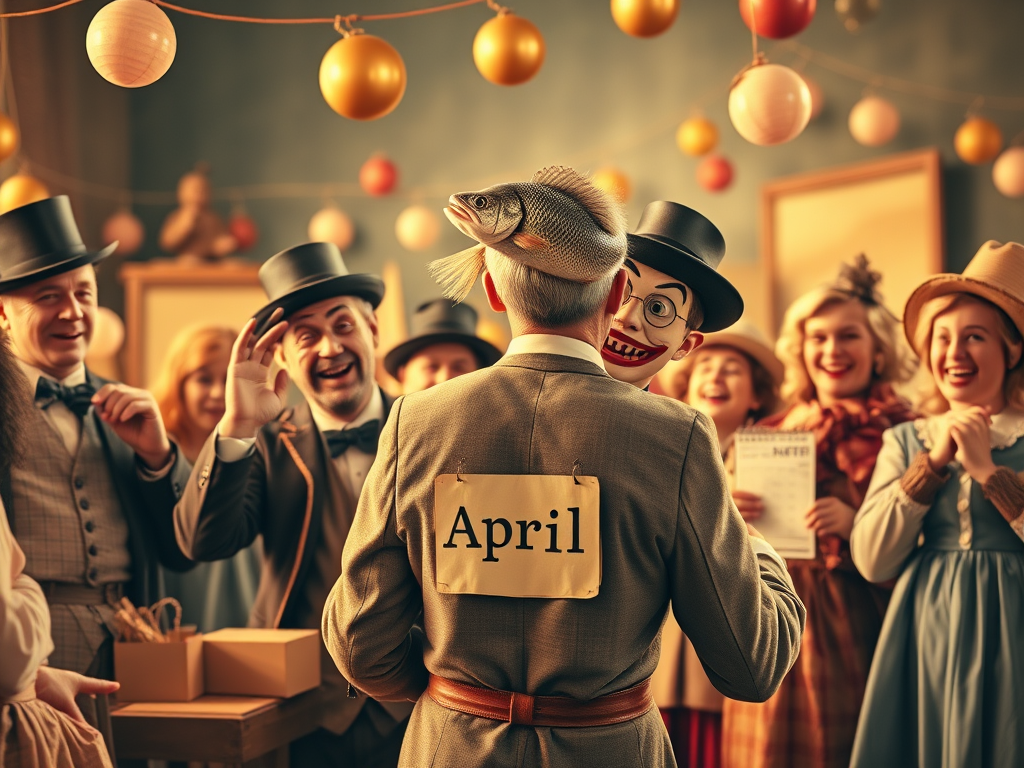
April 1st—the one day of the year when it’s socially acceptable to lie to your friends, make them look ridiculous, and then yell “April Fools!” like an evil mastermind. But have you ever wondered why we dedicate an entire day to trickery and mischief?
The origins of April Fools’ Day are a bit of a mystery, much like trying to figure out who put salt in your coffee this morning. Some say it started with a calendar mishap, others believe it’s rooted in ancient festivals, and a few even argue it’s just human nature to mess with people for fun. Let’s dive into the possible origins of this beloved (and sometimes annoying) tradition!
📆 Theory #1: The Calendar Confusion Hoax (Blame France)
One of the most popular explanations takes us back to 1582 when France decided to upgrade from the outdated Julian calendar to the new and improved Gregorian calendar (thanks, Pope Gregory XIII).
Before this switch, people celebrated New Year’s Day around late March to April 1st. But after the change, the new year officially started on January 1st. Since 16th-century communication was about as fast as a carrier pigeon with a broken wing, not everyone got the memo.
Those who kept celebrating the New Year in April were mocked as “April fools.” Pranksters would play tricks on them, like sticking paper fish on their backs and calling them “Poisson d’Avril” (April fish)—which is still a French tradition today!
So if your friend sends you a fake lottery ticket today, just remember—this all started because some people didn’t check their calendars.
🎭 Theory #2: The Roman “Hilaria” Festival
Another possible origin goes way back to Ancient Rome (because, let’s face it, most weird traditions either come from the Romans or the Vikings). The Romans had a festival called Hilaria (which literally means “joyful”), celebrated around March 25th.
During Hilaria, people dressed up in disguises, played jokes on one another, and basically went wild with mischief. It was all in honor of Attis, a god associated with rebirth and renewal—kind of like how we renew our sense of humor every April 1st.
So, in a way, April Fools’ Day might just be a modern version of the Romans’ annual prank fest. Except today, we use Photoshop and fake news instead of togas and animal sacrifices.
🏴☠️ Theory #3: The Scottish and Dutch Connection
By the 18th century, April Fools’ Day had spread across Europe, and different countries put their own spin on it.
- Scotland: The Scots took things to the next level by turning April Fools’ into a two-day event called “Huntigowk Day.” The first day involved sending people on ridiculous errands that led nowhere (like asking someone to fetch “elbow grease”). The second day, known as “Taily Day,” focused on pranking people by pinning fake tails or “kick me” signs on their backs. Yep, you can thank the Scots for that classic joke.
- The Netherlands: Some historians link April Fools’ to April 1, 1572, when Dutch rebels tricked the Spanish army and won a major battle. This might explain why the Dutch love pulling pranks—because their ancestors literally fooled their way to victory.
😂 The Best April Fools’ Pranks in History
Over the years, April 1st has become a global playground for pranks, with newspapers, companies, and even governments getting in on the fun. Here are some of the best April Fools’ jokes ever pulled:
📺 1957 – The BBC’s “Spaghetti Tree” Hoax
The BBC aired a segment about spaghetti growing on trees in Switzerland, and thousands of viewers actually believed it. Some even called the station, asking how they could grow their own spaghetti tree. 🍝
🔔 1996 – Taco Bell “Buys” the Liberty Bell
Taco Bell announced they had purchased the Liberty Bell and renamed it the “Taco Liberty Bell.” Americans were outraged—until they realized it was a joke (and maybe also wished it was true).
🔍 2018 – Google’s “Bad Joke Detector”
Google claimed they had invented an AI-powered joke detector that could analyze how bad your dad jokes really were. If only it were real…
🎉 Why Do We Love April Fools’ Day?
Psychologists say we enjoy pranks because they:
✅ Relieve stress (except for the victim of the prank)
✅ Strengthen social bonds (as long as the prank isn’t TOO mean)
✅ Challenge our assumptions (because not everything on the internet is true—shocking, right?)
Whether you love it or hate it, April Fools’ Day is here to stay. Just remember: trust nothing, suspect everyone, and double-check your shoelaces.
Happy pranking! 😆🎭
Leave a Reply