
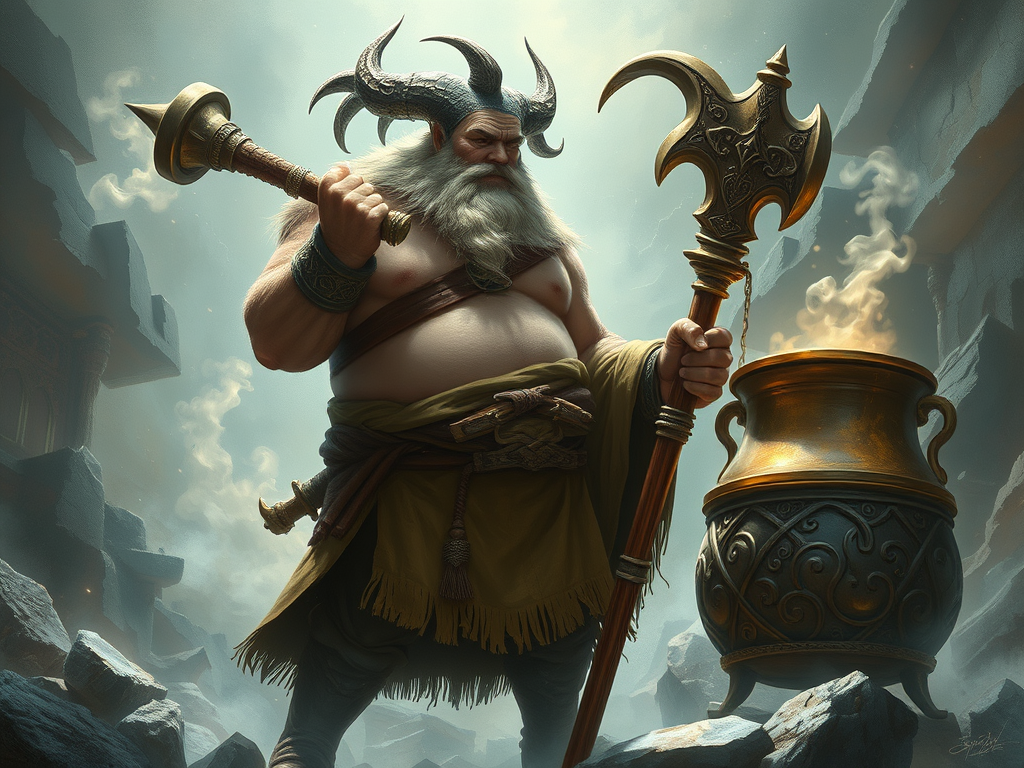
Dagda, one of the most revered gods in Celtic mythology, has journeyed through history to become a fascinating character in modern storytelling. Known as the Good God—a master of all skills—Dagda stood at the heart of the Tuatha Dé Danann, the supernatural race of gods and heroes in Irish lore. His powers were immense, his personality richly multifaceted, and his influence profound.
Yet today, Dagda’s presence has evolved, reflecting the changing tastes and storytelling trends of modern audiences. From video games to comics and TV shows, let’s explore how this ancient deity has been reimagined in pop culture. Along the way, we’ll examine the connections between his traditional attributes and his modern portrayals, drawing insights into why these changes resonate with us today.
Who Were the Tuatha Dé Danann?
To understand Dagda, it helps to know about the Tuatha Dé Danann. In Celtic mythology, they were a divine race who descended upon Ireland in a great cloud, bringing wisdom, magic, and art. They were the guardians of knowledge and the land, battling monstrous Fomorians (chaotic beings of destruction) to protect Ireland. The Tuatha Dé Danann were not just gods; they were cultural archetypes, embodying ideals like leadership, creativity, and resilience.
Dagda was their leader, the wise and powerful figure who wielded authority, magic, and strength. Let’s look at how his traditional characteristics are reflected—or altered—in modern portrayals.
Dagda’s Traditional Attributes
Dagda is remembered for his dualities: a cosmic figure who could be both fearsome and relatable.
- The Provider: His Cauldron of Abundance (Coire Anseasc) was a magical vessel that never ran empty, symbolizing hospitality and endless generosity.
- The Judge and Protector: His Club (Lorg Mór) could kill with one end and heal with the other, representing his control over life and death.
- The Conductor of Seasons: His Harp (Uaithne) could change the seasons and inspire or manipulate emotions, emphasizing his dominion over nature and human experience.
- The Humorous Everyman: Despite his immense power, Dagda’s myths often portrayed him with humor—eating too much porridge, getting into scrapes, and yet always coming through as a capable leader.
These traits made him a richly layered character: a god of cosmic power, yet with a down-to-earth personality that connected him to the people.
Dagda in Modern Pop Culture
Dagda has found new life in contemporary media, reinterpreted for different audiences and storytelling styles. Below are some specific examples and trends that highlight how his character has evolved.
1. Video Games: Dagda as a Mythic Powerhouse
Video games tend to spotlight Dagda’s physical might and magical tools, often emphasizing his role as a warrior.
- SMITE (Hi-Rez Studios): In this multiplayer online battle arena, Dagda is reimagined as a fearsome combat deity. His Lorg Mór becomes a tool of destruction, while his Coire Anseasc acts as a healing mechanic for his team. This portrayal focuses on his battlefield prowess, appealing to players seeking action-packed depictions of gods.
- Shin Megami Tensei IV: Apocalypse (Atlus): Dagda appears as a darker, more cynical figure, a stark departure from his jovial mythology. Here, he embodies a harsh, survivalist philosophy, showcasing how his traits can be reinterpreted in a grittier context.
2. Comics and Fantasy Literature: Dagda as a Mentor
In comics and novels, Dagda often takes on the role of a wise elder or guide, emphasizing his connection to wisdom and leadership.
- The Sandman Universe (DC/Vertigo): Dagda occasionally appears in Neil Gaiman-inspired works, where he is associated with cosmic balance and ancient wisdom. These portrayals focus less on his humor and more on his status as a primordial force.
- Fantasy Series (e.g., The Iron Druid Chronicles by Kevin Hearne): Dagda is referenced as part of the broader Celtic pantheon, often as a guiding figure whose knowledge influences the story’s progression.
3. Television and Film: Dagda as a Symbolic Archetype
While Dagda has not featured prominently in mainstream film or TV, his archetype—a wise, earthy protector—is reflected in shows like American Gods and The Witcher. Characters inspired by Dagda emphasize themes of balance, nature, and leadership.
4. Tabletop Role-Playing Games: The Flexible Dagda
In RPGs like Dungeons & Dragons, Dagda-inspired deities often appear as gods of agriculture, nature, or renewal. Players adapt his traits to fit their narratives, allowing Dagda’s spirit to thrive in endlessly creative ways.
Key Differences in Modern Portrayals
A. From Relatable to Mythic
Ancient Dagda was a humorous, approachable god who made mistakes but always delivered. Modern versions often elevate him to a purely epic figure, losing some of his everyman charm in favor of larger-than-life gravitas.
B. Focus on Combat and Power
In action-oriented media, Dagda’s role as a judge or creator is often sidelined in favor of his physical and magical might. This shift reflects the priorities of contemporary storytelling, where visual spectacle and combat take precedence.
C. Simplified Traits
While the original Dagda balanced many roles—warrior, provider, protector—modern adaptations tend to focus on one or two traits, such as his strength or leadership. This streamlining makes him easier to fit into specific narratives but sacrifices some of his complexity.
Why Do These Changes Appeal to Modern Audiences?
Modern portrayals of Dagda resonate with audiences for several reasons:
- Action-Oriented Storytelling: Games and movies thrive on dramatic conflict, and Dagda’s warrior traits fit seamlessly into this dynamic.
- Archetypal Heroes: Today’s audiences are drawn to epic, archetypal figures, and Dagda’s reimagined might and wisdom make him a natural fit for such roles.
- Flexibility for Creative Expression: Dagda’s multifaceted nature allows creators to adapt him in ways that suit their worlds, whether as a protector, a warrior, or a cosmic force.
Dagda’s Legacy in Modern Media
The reimagining of Dagda in pop culture has ensured his mythology continues to thrive. Whether as a video game character or a literary figure, his enduring presence invites new audiences to discover Celtic mythology and its rich tapestry of gods and heroes.
What’s Your Favorite Take on Dagda?
From the mighty Dagda of SMITE to the wise elder of fantasy novels, modern media has reinterpreted this iconic Celtic god in countless ways. What’s your favorite portrayal of Dagda—or another mythological figure—in pop culture? Share your thoughts in the comments below, and let’s keep the conversation alive about how mythology shapes and inspires our modern stories!
Leave a Reply