
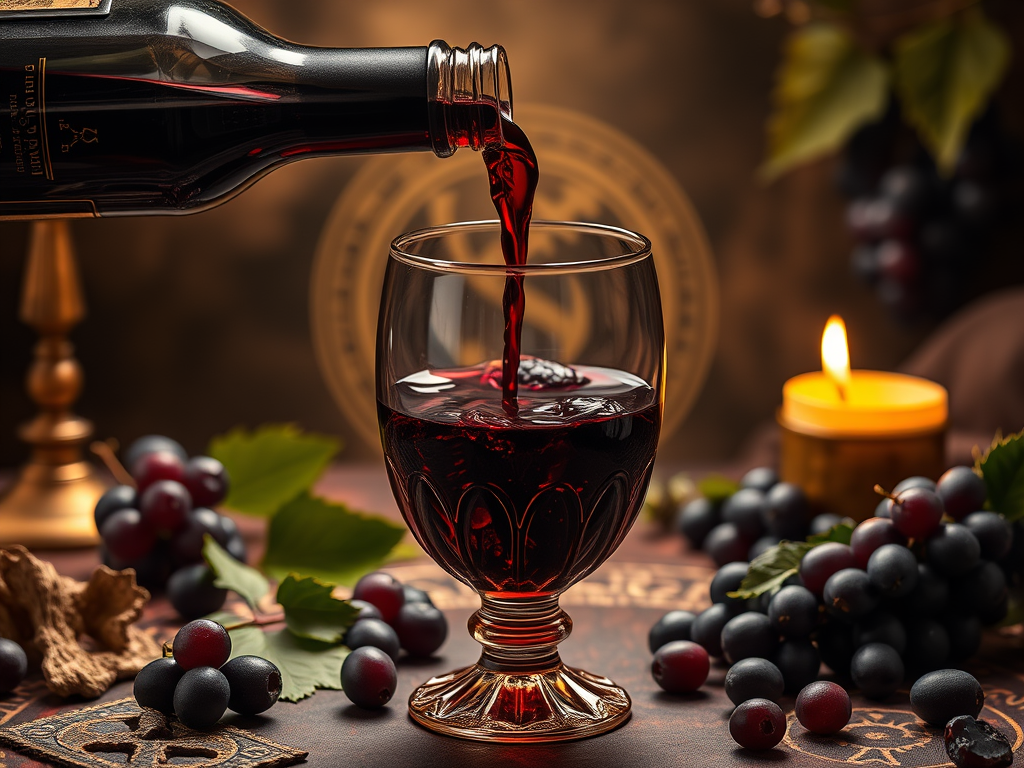
Oinomancy, though less known than other forms of divination like tarot or scrying, is a fascinating practice deeply rooted in human history, particularly in cultures that revered wine as both a sacred and celebratory substance. Let’s delve into its origins, techniques, symbolism, and how it can be adapted today.
Historical and Cultural Roots of Oinomancy
- Ancient Origins:
- Greek and Roman Practices:
In ancient Greece and Rome, wine was not only a staple of daily life but also held spiritual and ritualistic importance. Dionysus (Greek) or Bacchus (Roman), the god of wine, was associated with revelry, ecstasy, and divination. Wine ceremonies were often accompanied by omens and prophecies. - Mystery Cults:
Initiates of Dionysian or Bacchic cults used wine as a medium for connecting to the divine, inducing altered states of consciousness for visions or symbolic interpretations. The practice of oinomancy likely evolved as an extension of this sacred connection.
- Greek and Roman Practices:
- Medieval Europe:
- In medieval times, wine retained its sacred connotations, particularly in Christian rituals like the Eucharist, where wine symbolized the blood of Christ. While formal oinomancy was less prominent, mystical interpretations of wine in religious contexts reflect its continued spiritual relevance.
- Modern Renaissance:
- With the resurgence of interest in esoteric traditions, oinomancy has re-emerged as a blend of historical mysticism and modern creativity, often practiced by those seeking alternative divination methods that integrate pleasure and intuition.
Techniques and Methods of Oinomancy
Oinomancy involves observing and interpreting the physical, visual, and even sensory qualities of wine. Here are some of the most common approaches:
- Sediment Reading (Similar to Tasseography):
- Setup: Use a darker wine (red is preferable) and a glass or bowl with a wide base. After drinking or swirling, observe the residue or sediment at the bottom.
- Interpretation:
- Shapes or Symbols: Look for recognizable images or patterns (e.g., animals, objects, letters). Each has symbolic meanings.
- Clumps or Distribution: Sparse sediment might indicate clarity or simplicity, while dense clusters could signify complexity or challenges.
- Bubble Observation (Ideal for Sparkling Wines):
- Setup: Pour sparkling wine into a glass and let it settle briefly. Watch the bubbles rise and move.
- Interpretation:
- Formation: Bubbles forming circles may symbolize unity or cycles.
- Movement: If bubbles gather in one direction, it could suggest an upcoming journey or a new focus in life.
- Size: Large bubbles might indicate big opportunities, while smaller ones could point to subtle influences.
- Ripple and Swirl Patterns:
- Setup: Pour wine slowly into a shallow dish or swirl it in a glass. Watch the ripples or streaks left behind as the liquid settles.
- Interpretation:
- Lines or Paths: Straight lines could signify direction or clarity, while chaotic patterns might hint at confusion or unexpected events.
- Clusters: Areas where ripples converge could point to focal points in life.
- Sensory Impressions (A Holistic Approach):
- The aroma, taste, and even the emotional response elicited by the wine can be part of the reading.
- Flavor Notes: Sweetness might represent joy or abundance, while bitterness could hint at unresolved conflicts.
- Emotions: A sudden feeling of nostalgia or excitement could connect to the querent’s past or future.
- The aroma, taste, and even the emotional response elicited by the wine can be part of the reading.
Symbolism in Oinomancy
The symbolic language of oinomancy draws from broader esoteric traditions but also incorporates wine-specific meanings:
- Color of the Wine:
- Red: Passion, vitality, or deep emotional matters.
- White: Purity, clarity, or intellectual pursuits.
- Rosé: Balance, harmony, or transitions.
- Clarity vs. Opacity: Clear wine can suggest transparency or truth, while murkiness might point to hidden factors or deceit.
- Temperature and Viscosity: A warm, smooth wine could represent comfort and ease, while a cool or sharp wine might signify challenges or alertness.
How to Perform an Oinomancy Ritual
Here’s a step-by-step guide for a more structured oinomancy session:
- Preparation:
- Choose a quiet, comfortable space. Set the mood with candles or soft music to enhance focus.
- Select a wine that resonates with your intention (e.g., red for love, white for clarity).
- Set Your Intent:
- Before pouring the wine, hold the bottle and focus on your question or intention. Speak it aloud or meditate on it.
- Pour and Observe:
- Pour the wine into your chosen vessel slowly and deliberately. Watch how the wine flows and settles.
- Engage Your Senses:
- Swirl, smell, and taste the wine, noting any immediate impressions or emotions.
- Divination Process:
- Analyze the sediment, bubbles, or patterns as described above.
- Record your observations and interpretations in a journal for later reflection.
Incorporating Oinomancy Today
- Social Gatherings:
Oinomancy can be an engaging activity at wine tastings or dinner parties. Offer personalized readings for guests, blending entertainment with mysticism. - Personal Reflection:
Use oinomancy as part of a self-care ritual to reflect on challenges or decisions. - Pairing with Other Practices:
Combine oinomancy with tarot, astrology, or rune readings to deepen insights.
Final Thoughts
Oinomancy is a unique blend of art, intuition, and history. Its charm lies in its accessibility—no complex tools are required, just a good bottle of wine and an open mind. Whether practiced as a casual activity or a serious divinatory art, it serves as a reminder of the deep connections between the physical and spiritual worlds.
Would you like symbolic meanings for specific wine-related elements, such as grape varieties or vintage years? Or perhaps guidance on adapting oinomancy for modern spirituality?
Leave a Reply