
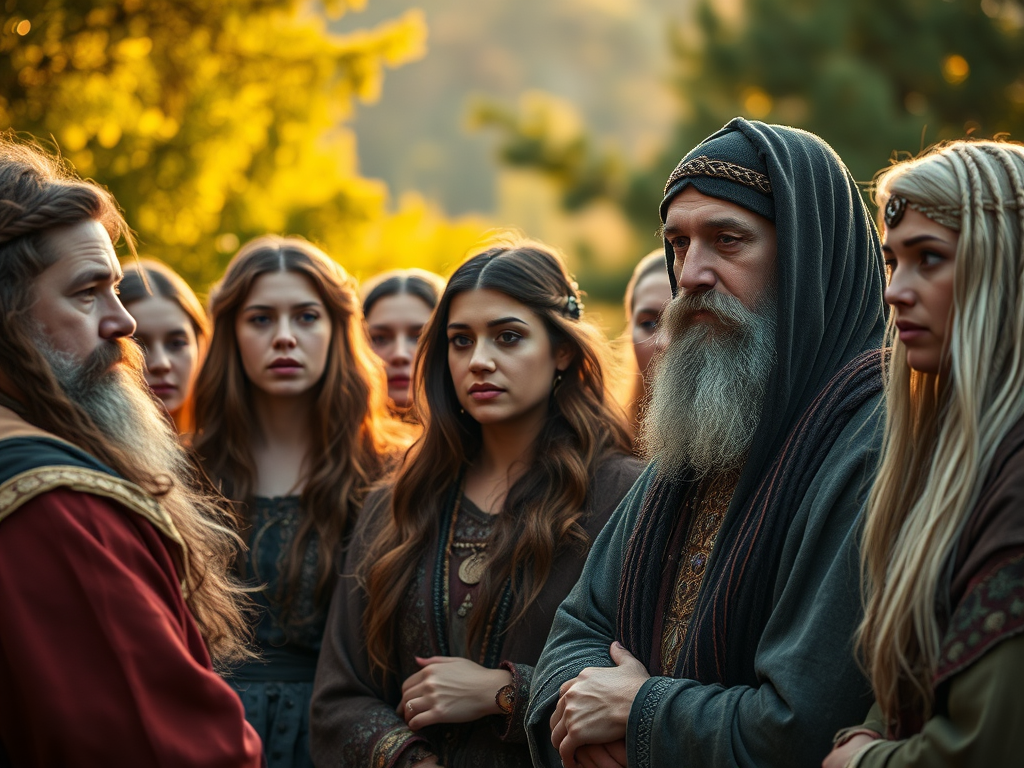
Curious about Theodism, the modern revival of ancient Germanic and Anglo-Saxon beliefs? In this deep dive, we’ll explore the essence of Theodism, where tribal community, divine honor, and fate are woven into a rich tapestry of modern Paganism. Whether you’re exploring Paganism or just curious about spiritual communities, this guide offers a thorough look at how Théodists bring the ancient past into the present.
What is Theodism?
Theodism, or Théodish belief, is a branch of modern Paganism dedicated to reviving the religious, social, and cultural practices of ancient Germanic and Anglo-Saxon tribes. Unlike more individualized Pagan paths, Theodism emphasizes community structures, hierarchies, and cultural authenticity. The name “Theodism” derives from the Old English term “þéod,” meaning “tribe” or “people.” This focus on the collective—more than the individual—makes Theodism unique among neo-Pagan practices.
The central idea of Theodism is that worship and community must be intertwined. Rather than gathering occasionally for rituals, Théodists form close-knit tribes, committed to each other as well as to their gods and ancestors. Within these tribes, the structure reflects the ancient social hierarchy, with clearly defined roles for each member. This revivalist approach isn’t just about rituals; it’s about creating a world where gods, honor, and community are as real and present as they were a thousand years ago.
The Roots of Theodism: Reconstructing Tribal Identity
Imagine a close-knit family or a small community where everyone knows their place and shares a common identity. That’s the essence of Theodism. Théodists model their tribes after historical Germanic and Anglo-Saxon societies, aiming to restore practices and values lost over time. Every Théodist belongs to a specific “hearth” culture—an ancient tribe with its own gods, customs, and legends. For example, some may follow the ways of the Anglo-Saxons, while others draw from Norse traditions.
Theodism focuses on reviving these traditions authentically, often going to great lengths to study historical texts, archaeological findings, and folklore to capture the essence of ancient Germanic and Anglo-Saxon life. Theodism is often compared to reenactment, but it’s not limited to historical accuracy. For Théodists, tribal identity is both a spiritual and a social commitment.
Structure and Hierarchy: The Lord, The Lady, and the Tribal Order
One of the key characteristics of Theodism is its hierarchy. Unlike Wicca or eclectic Pagan paths, where structure is usually minimal, Theodism organizes its tribes in a traditional hierarchy. At the top is the Lord (or Lady), the leader who guides the tribe and performs significant spiritual duties. Below them are ranks that mirror the roles in an ancient tribe: thanes, freemen, and thralls.
Each rank has its responsibilities and privileges, and promotion within the hierarchy is often a sign of honor and commitment to the tribe. This hierarchy may feel rigid to outsiders, but for Théodists, it’s essential to their practice. The hierarchy isn’t about power; it’s about order, respect, and the roles that make the community function. Think of it like a team or orchestra: each member has a role, and together, they create harmony.
One role, in particular, that stands out is that of the thrall. While historically thralls were often servants, in Theodism, it’s a role of initiation and humility. It’s symbolic, a way to show dedication to the tribe. Over time, thralls can earn higher ranks through their contributions, showing that commitment and honor are valued above all.
The Core Beliefs: Gods, Wyrd, and Honor
Theodism is built around three primary beliefs: reverence for gods, a connection to wyrd, and the cultivation of honor.
Gods
Théodists honor gods from specific Germanic and Anglo-Saxon pantheons, such as Woden (Odin) in Anglo-Saxon tradition or Frey in Norse beliefs. These deities are seen as real, active beings who influence the world and can be appealed to for guidance, protection, and strength. For Théodists, the gods are not distant but present, participating in the lives of the tribe.
Wyrd
Wyrd (pronounced “weird”) is a complex concept that loosely translates to “fate” or “destiny.” It’s seen as a cosmic web, where every choice, action, and event influences the whole. Théodists view wyrd as a personal and collective responsibility, meaning that every individual’s actions affect not just themselves but the entire tribe. Every decision adds to the tapestry of wyrd, impacting future events and choices.
Imagine wyrd as ripples in a pond: when you make a choice, it sends ripples through your life and the lives of those around you. In Theodism, living with an awareness of wyrd means making thoughtful choices, respecting relationships, and upholding the tribe’s honor.
Honor
Honor is the social currency of Theodism. It’s not just a matter of reputation; it’s about integrity and accountability. Théodists believe that every person has a duty to maintain their honor by fulfilling promises, respecting others, and protecting the tribe. A person’s honor directly influences their wyrd, meaning that honorable actions strengthen the individual and, in turn, the tribe. When honor is lost, it can take time and commitment to regain.
Rituals and Blóts: Worshiping the Gods
In Theodism, rituals are deeply communal and significant events, with blóts (sacrificial ceremonies) being central. Blóts are formal occasions where Théodists offer mead, food, or crafted items to the gods as a sign of devotion. These gatherings are more than mere social events; they are opportunities to honor the gods, bond with each other, and collectively influence wyrd.
The symbel, a ritual feast, often follows a blót. During a symbel, Théodists share toasts to the gods, ancestors, and each other. These toasts are called “boasts” or “brags,” and each person has a chance to share their achievements or honor someone in the tribe. These rituals are not just about individual devotion but are meant to strengthen the community’s bonds.
Think of it like a sacred dinner party where each person has a role, and every gesture has meaning. The blót and symbel embody the tribe’s wyrd and reinforce its unity and shared purpose.
Kinship and Community: The Heart of Theodism
While Theodism is religious, it’s also social. Théodists don’t just come together for rituals—they build tight-knit tribes, akin to families, where members rely on each other in times of need and celebrate successes together. This kinship goes beyond typical friendships. Each person has responsibilities to their community, whether helping someone in need, sharing knowledge, or guiding newcomers.
In a world that often feels disconnected, Theodism offers a sense of belonging, where spiritual and social life are closely intertwined. This focus on kinship is what makes Theodism unique among Pagan practices; it’s not a path for solitary practitioners but a collective journey.
Living as a Théodist in Today’s World
Practicing Theodism in today’s world can be challenging, as it contrasts sharply with modern, individualistic values. However, many Théodists find ways to bring their tribal faith into daily life. Some may keep altars, say daily prayers, or observe seasonal rituals. Others embody Théodish values of honor and kinship in their interactions with others, even outside their tribe.
Balancing ancient beliefs with a modern lifestyle requires creativity and dedication. For most Théodists, Theodism isn’t something they practice only on holidays; it’s a way of life. From the workplace to the home, Théodists aim to embody integrity, responsibility, and respect for wyrd in everything they do.
How Theodism Differs from Other Neo-Pagan Paths
Theodism stands apart from other Neo-Pagan practices like Wicca or Heathenry. Where Wicca is often eclectic and focused on individual practice, Theodism requires structure, community, and hierarchy. Even Heathenry, which also revives Germanic traditions, lacks Theodism’s rigid hierarchy and emphasis on historical authenticity.
Theodism isn’t just about rituals or belief—it’s about recreating a way of life. This dedication to reconstructing ancient customs, down to the social structures, makes it one of the most unique and challenging paths within modern Paganism.
Is Theodism Right for You?
Theodism is a serious commitment. It requires dedication to the tribe, respect for tradition, and a willingness to live by honor and wyrd. If you’re interested in a deeply communal path that values history, kinship, and integrity, Theodism may be worth exploring. Consider attending gatherings or speaking with members to see if the community aligns with your values.
Call to Action
If Theodism resonates with you, take the first step by learning more about your local Théodish groups or attending an open symbel. Every journey begins with curiosity, and you may find that Theodism offers a community and a way of life that aligns with your values.
Leave a Reply