
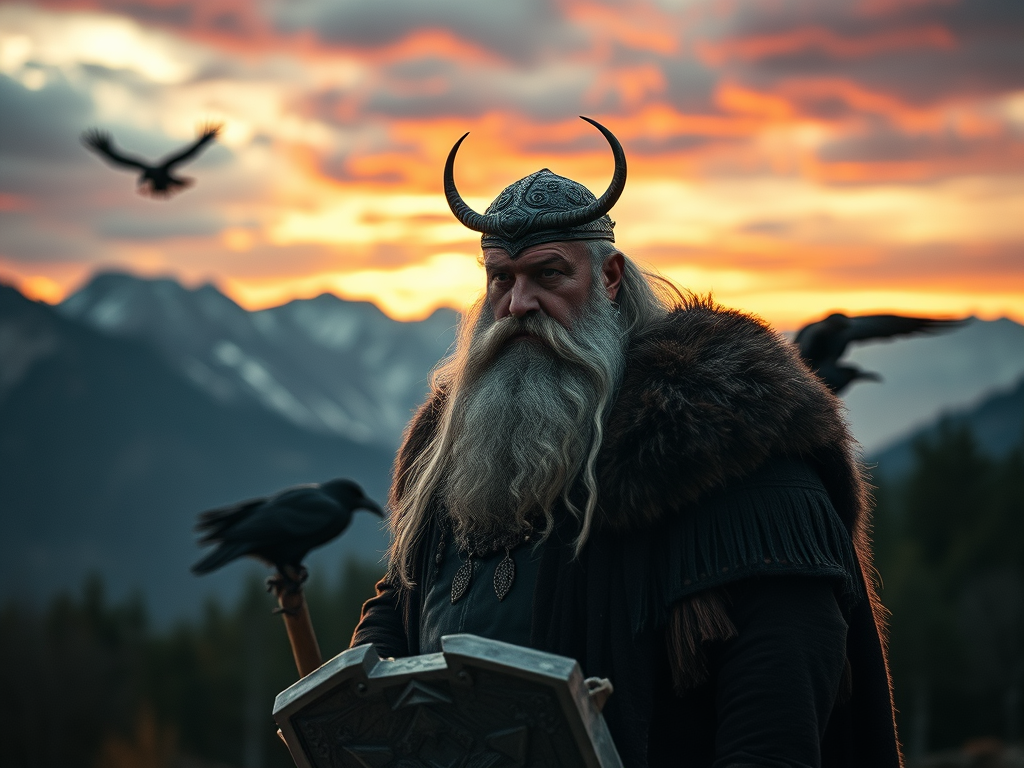
Have you ever wondered what it would be like to worship gods who are destined to face an apocalyptic battle, wield a thunder-wielding hammer, or ride a chariot pulled by cats? Welcome to the world of Viking Norse Paganism, a belief system where gods and giants clash, fate can be altered with magic, and trees hold the universe together. Before the Scandinavians became the Vikings we know (and love or fear, depending on your perspective), they followed a fascinating, complex religion that shaped their daily lives and their view of the cosmos.
In this post, we’ll dive into the thrilling history of Viking Norse Paganism, uncovering the gods, rituals, and legends that helped build Viking culture. Whether you’re here because you’re a mythology nerd, a Viking enthusiast, or just curious about why Thor’s hammer is suddenly a popular pendant again, you’re in the right place!
The Origins of Viking Norse Paganism
Imagine Scandinavia thousands of years ago—endless forests, towering mountains, freezing winters, and the omnipresent sea. It’s a place where nature isn’t just scenery but a force to be reckoned with. The early Norse people saw their world as full of divine power, where every rock, tree, and stream held a spirit. These were the early days of Viking Norse Paganism, an animistic belief system that would eventually evolve into a more structured pantheon of gods by the Viking Age (around 800 CE).
Now, before we get ahead of ourselves, let’s talk about the Viking Age. This was a time when Norse sailors were raiding, trading, and exploring far beyond their homeland. As the Vikings sailed the seas and encountered other cultures, they expanded their pantheon and belief systems, integrating new ideas but staying true to their roots—quite literally in some cases, thanks to their world-encompassing Yggdrasil, the World Tree.
The Norse Pantheon: Gods, Goddesses, and a Trickster You Might Know
Forget the idea of one almighty god sitting on a cloud. The Norse gods were a lively bunch, with their own strengths, flaws, and (many) personal issues. Here are the key players of the Viking Norse world, who made life on earth (and Asgard) a bit more dramatic:
Odin: The One-Eyed Wonder
Odin is the Allfather, but don’t let that grand title fool you. He’s not your typical benevolent deity. This guy is willing to sacrifice just about anything for wisdom, including one of his eyes (talk about commitment). You can imagine his pirate-like look, with his ravens, Huginn and Muninn, flying around as his personal spy network. Odin’s job? Overseeing the cosmos, leading the gods, and preparing for Ragnarok, the world-ending event he knows is coming but can’t stop. Bummer, right?
Thor: The Viking Superhero
If Odin is the wise dad, Thor is the strong, slightly reckless, but lovable older brother. Armed with his magical hammer, Mjölnir, Thor is the god of thunder, protecting both gods and humans from giants and other enemies. He’s basically the Viking bouncer, always ready to throw down with anyone threatening the peace. Fun fact: Vikings used to wear Mjölnir pendants to protect themselves—kind of like a cosmic good luck charm, but with more thunder and lightning.
Freyja: Goddess of Love and War (Talk About Multitasking)
Freyja is the ultimate multitasker: she’s the goddess of love, fertility, beauty, war, and death. She’s a little bit like Wonder Woman, except instead of flying a jet, she rides a chariot pulled by cats (yes, you read that right—cats). Oh, and she practices seidr, a form of Norse magic that lets you manipulate fate. So, she’s beautiful, fierce, and magical—a true Viking queen.
Loki: The Original Agent of Chaos
Now, let’s get to Loki, the god of mischief. Loki is one of those “love him, hate him” types. He’s a shape-shifter, prankster, and general troublemaker who, more often than not, causes as many problems for the gods as he helps them solve. He’s also destined to betray them and lead the forces of chaos in Ragnarok. Honestly, if you’re ever at a Viking feast and Loki shows up, hide the mead—things are about to get weird.
Viking Rituals and Sacred Blóts: More Than Just Sacrifice
You might think Viking worship was all about grim sacrifices (thanks, Hollywood), but Viking Norse Paganism was far more complex and community-driven than most people imagine. Sure, sacrifices—called blóts—were important, but they were part of much larger seasonal festivals and rites that helped the Vikings feel connected to both their gods and their world.
Blót: A Gift to the Gods
At its core, a blót was an offering—anything from crops to valuable objects, and yes, sometimes animals (and in rare cases, humans) were sacrificed to the gods. The idea behind the blót was reciprocity: if you give something valuable to the gods, they’ll give something back to you. It’s kind of like the Viking version of cosmic karma.
The blóts were usually held during key moments of the year, such as harvests or before dangerous voyages. The sacrifices took place in sacred spaces, often near water, groves, or large stones—places where the Vikings believed the veil between worlds was thin. These blóts weren’t grim affairs; they were lively, communal events followed by feasts and celebrations, where everyone ate, drank, and hoped for good fortune from the gods.
Yule: The Viking Holiday You Already Know
Ever decorated a Christmas tree or exchanged gifts during the winter solstice? Congratulations, you’ve already taken part in the Viking holiday of Yule! Yule, celebrated during the darkest days of winter, was all about surviving the cold and hoping the sun would return. It was a festival of lights, fires, and feasts, meant to keep spirits high as the world outside froze.
This festival wasn’t just about practical survival, though—it had spiritual significance. Odin, in his mysterious and wild form, was said to lead the Wild Hunt, a ghostly procession of supernatural beings that roamed the skies during Yule. Vikings would leave out offerings for Odin to ensure that their homes stayed safe. Sounds kind of like leaving cookies for Santa, doesn’t it?
Midsummer: Celebrating Light and Life
If Yule was about surviving winter, then Midsummer was all about celebrating life, warmth, and the harvest to come. Held around the summer solstice, this was one of the most joyous times in the Viking calendar. Bonfires blazed, and the Vikings would gather to honor the sun and the fertility of the earth, hoping for a bountiful season ahead.
At this time, Freyr, the god of fertility and prosperity, was a key figure. People would pray to him for good crops, abundant livestock, and general well-being. Midsummer was also a time for love and matchmaking—because what better time to start a relationship than when the sun hardly sets?
Dísablót: Honoring the Spirits of the Dead
One of the more mysterious and solemn Viking rituals was the Dísablót, which was dedicated to female spirits called the dísir. These spirits could be ancestors or protective goddesses, and the blót was held to honor them and ensure their protection over families and crops. This festival was often held in late autumn or early winter and was also a time to reflect on death, ancestry, and the cycles of life and death.
The dísir were believed to have influence over fertility, protection, and fate. So, in a way, the Dísablót was a Viking version of ancestor worship—paying respects to the past in hopes of securing the future.
The Magic of Seidr and the Volvas (The Original Fortune-Tellers)
Vikings didn’t just rely on gods to shape their world—they had magic too, and it was primarily practiced by women, known as volvas. Seidr, a form of Norse sorcery, allowed these powerful women to influence fate, communicate with spirits, and even see into the future. Freyja, being a seidr expert herself, was the goddess most associated with this mystical practice.
In Norse society, a volva could be seen as part shaman, part fortune-teller, and part therapist (because let’s be honest, manipulating fate probably involves a lot of emotional work). These women held incredible respect and power, and their magic was often sought after in times of need—especially when the future looked uncertain, like before a battle or a long sea voyage.
Ragnarok: The Viking Apocalypse (Spoiler Alert: Everyone Dies)
If you think the gods had it easy, think again. Norse mythology culminates in Ragnarok, a world-shattering series of events that ends with the death of many gods, the destruction of the world, and then… rebirth. Yeah, it’s as epic as it sounds.
In Ragnarok, Odin will face the giant wolf Fenrir, Thor will fight the world serpent Jörmungandr, and even Loki will have his day in battle. The gods will fight bravely, but they won’t win. Unlike other religions that promise eternal peace or salvation,
Viking Norse Paganism fully embraces the idea that everything has an end—and then begins again. It’s cyclical, like nature itself. So, while the world may be destroyed, a new one will rise from the ashes, just like a phoenix. Except, you know, Viking style.
The Christianization of the Vikings: From Thor to the Cross
By the late Viking Age, Christianity started making its way into Scandinavia. You’d think the conversion would be brutal (what with all the raiding and stuff), but actually, it was more of a slow, gradual process. Vikings encountered Christianity during their raids and travels, and some even converted for political reasons—because nothing says “new faith” like wanting to avoid a fight with the Holy Roman Empire.
However, old habits die hard, and for a long time, Christianity and Norse Paganism coexisted. Some kings, like Olaf Tryggvason of Norway, used their newfound faith to unify their lands, even if it meant some pretty aggressive conversions (St. Olaf didn’t earn sainthood by just handing out crosses, after all).
But despite the spread of Christianity, Norse Paganism’s influence never truly disappeared. Instead, it went underground, woven into folklore, and centuries later, reemerged as part of a modern revival of interest in Viking culture.
Norse Paganism’s Modern Comeback: From Neo-Paganism to Pop Culture
So, why is Norse Paganism making a comeback in the modern world? Maybe it’s because we’re all secretly longing for a time when life was a bit simpler (and cooler, with gods and magic), or maybe it’s the influence of pop culture. Thanks to movies like Marvel’s Thor, TV shows like Vikings, and video games like Assassin’s Creed: Valhalla, Norse mythology has never been more popular.
Not only is Norse mythology featured in entertainment, but there’s also been a rise in neo-pagan movements like Asatru, where people honor the old gods and embrace the rituals of Viking Norse Paganism. In a world where we’re increasingly disconnected from nature, Viking Paganism’s emphasis on the cycles of life, death, and rebirth resonates with people today.
Conclusion: Embrace Your Inner Viking
Viking Norse Paganism isn’t just about myths and gods—it’s a way of seeing the world, one that values strength, wisdom, and the unbreakable bond between nature and humanity. From Odin’s quest for knowledge to Thor’s hammer smashing through enemies, the gods of Norse Paganism reflect the realities of life: it’s unpredictable, sometimes harsh, but always full of possibility.
Mythology enthusiasts, Viking history buffs, and curious minds all have something to explore in Viking Norse Paganism. Whether it’s understanding why Vikings loved thunder gods or world trees, this tradition offers something for everyone. So, why not embrace your inner Viking? Wear that Mjölnir pendant proudly. Toast to Odin at your next feast. Just keep Loki out of the guest list.
Call to Action: Which Norse god is your favorite? Are you more of an Odin knowledge-seeker or a Thor hammer-wielder? Let me know in the comments below! And if you want to dive deeper into Viking history or more mythological tales, be sure to check out our other posts. Skål!
Leave a Reply