
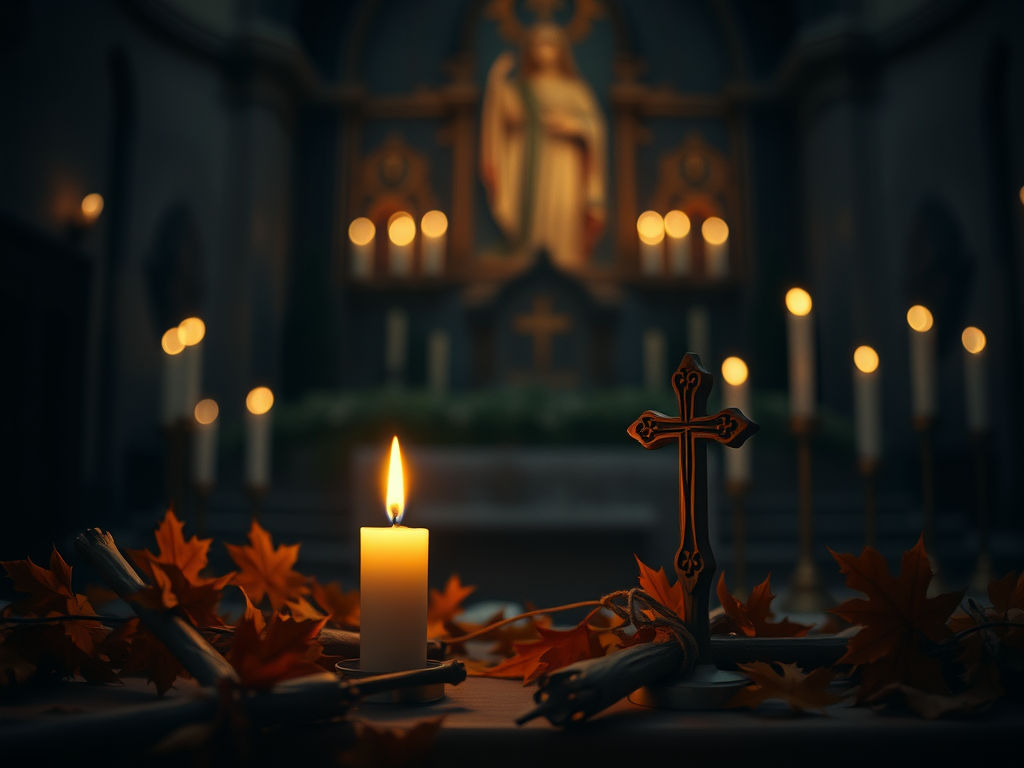
For many, the end of October signals the arrival of Halloween, a holiday filled with candy, costumes, and haunted houses. But long before Halloween took on its modern form, October 31st was known as All Hallows’ Eve, a night of sacred remembrance within the Christian tradition. It was the vigil that prepared for All Saints’ Day on November 1st and All Souls’ Day on November 2nd—three days collectively known as Allhallowtide.
While the modern Halloween we recognize today is fun and commercialized, All Hallows’ Eve had deeper spiritual significance. Its roots lie in the ancient practice of honoring saints and praying for departed souls, far removed from the ghosts and goblins that now dominate our celebrations. In this blog post, we’ll trace the fascinating origins of All Hallows’ Eve, exploring how it emerged as part of Christian tradition, how it transformed over centuries, and how it ultimately influenced what we know today as Halloween.
1. All Hallows’ Eve: The Night Before All Saints’ Day
To fully understand the origins of All Hallows’ Eve, we need to start with its connection to All Saints’ Day, also known as All Hallows’ Day. This day, observed on November 1st, is dedicated to honoring all the saints—both those officially canonized by the Church and those whose names are known only to God. These saints, believed to be in heaven, are celebrated for their virtuous lives and their role as intercessors for the living.
But like many important Christian feasts, the day is preceded by a vigil: All Hallows’ Eve, which takes place on October 31st. Much like Christmas Eve prepares for Christmas Day, or the Easter Vigil prepares for Easter Sunday, All Hallows’ Eve was a time for Christians to reflect, pray, and prepare their spirits for the holy day ahead.
The word “hallow” itself is an Old English word that means “holy” or “saintly,” and so All Hallows’ Eve literally means “the evening before All Saints’ Day.” This night was meant to be a solemn and sacred time, set aside for prayer and contemplation of the spiritual journey toward sainthood.
The Early Beginnings of All Saints’ Day
The origins of All Saints’ Day can be traced back to the 7th century, when Pope Gregory III dedicated a chapel in St. Peter’s Basilica to all the saints. This was a significant act of recognition for those who had died in the faith but were not officially recognized by the Church. Pope Gregory IV later extended the observance to the entire Western Christian Church in the 9th century, and November 1st was established as the official date for this feast.
All Hallows’ Eve, as the night before this feast, emerged as a time for Christians to reflect on their own mortality and the idea of eternal life. It was a night when the boundary between the sacred and the secular was thin, as people prayed for the souls of the faithful departed and honored the saints who had already achieved eternal glory.
2. All Souls’ Day: A Day to Pray for the Dead
Directly following All Saints’ Day is All Souls’ Day, observed on November 2nd. Whereas All Saints’ Day celebrates the souls in heaven, All Souls’ Day focuses on the souls still in purgatory—those undergoing purification before entering the presence of God. The idea of purgatory is central to All Souls’ Day. In Christian belief, purgatory is a temporary state where souls are cleansed of the remaining effects of sin so they can enter heaven.
Why Praying for the Dead Matters
The Christian tradition teaches that the prayers of the living can help these souls in purgatory complete their journey to heaven. All Souls’ Day became an important part of the Christian calendar in the 10th century, when St. Odilo of Cluny, a Benedictine abbot, formalized the celebration. From this point onward, the feast spread throughout Europe and became an official day of prayer for the dead.
Together, All Hallows’ Eve, All Saints’ Day, and All Souls’ Day form Allhallowtide, a period of time during which Christians focus on the reality of death, the hope of resurrection, and the communion of saints—those who are alive, those in heaven, and those still being purified.
3. Christian Tradition and Early Rituals of All Hallows’ Eve
In its earliest form, All Hallows’ Eve was a night of prayer and vigil. Christians would attend Mass, light candles for the deceased, and pray for both the saints and the souls still in purgatory. The themes of mortality and spiritual purification were central to this observance. Unlike the festive atmosphere of Halloween today, All Hallows’ Eve was a solemn, reflective night that encouraged the living to consider their own spiritual journey.
The Influence of Monastic Communities
Monastic communities played a significant role in shaping the early traditions of All Hallows’ Eve. In the Middle Ages, monks and nuns would often spend the night in prayer, holding vigils for the dead. They believed their prayers could aid those who were suffering in purgatory and help usher them into heaven. Candles were lit to symbolize the light of Christ guiding souls out of the darkness, a practice that continues in some Christian churches today.
The early Christian observance of All Hallows’ Eve was not about spooky costumes or trick-or-treating but about spiritual reflection. The focus was on the afterlife, the communion of saints, and the importance of praying for souls in need of purification.
4. Pagan Influences: Samhain and the Thin Veil Between Worlds
Though All Hallows’ Eve is deeply rooted in Christian tradition, its timing coincides with ancient pagan festivals, most notably the Celtic celebration of Samhain. Samhain, observed by the Celts on October 31st, marked the end of the harvest season and the beginning of winter—a time when the natural world was in transition. The Celts believed that during this time, the veil between the living and the dead was thin, allowing spirits to pass into the world of the living.
How Pagan and Christian Traditions Intersected
When Christianity spread to Celtic lands, many of the practices associated with Samhain began to blend with Christian observances of All Hallows’ Eve. Just as Samhain focused on the presence of spirits and the dead, All Hallows’ Eve also involved commemoration of the dead—but with a distinctly Christian focus.
For example, bonfires—a central element of Samhain—were adopted by early Christians as symbols of light and purification. Wearing disguises or masks, a practice meant to confuse wandering spirits, also found its way into Christian celebrations, eventually morphing into the modern tradition of costumes.
While the Christian Church sought to distance itself from pagan practices, the merging of these traditions was inevitable, particularly as both celebrations revolved around themes of life, death, and the spirit world.
5. The Evolution of All Hallows’ Eve Into Modern Halloween
As centuries passed, All Hallows’ Eve began to lose some of its solemnity, and certain folk traditions began to take precedence over the religious aspects of the holiday. By the Middle Ages, the night had become associated with mischief, superstition, and ghost stories.
One notable tradition that arose was souling. Poor Christians would go door-to-door offering prayers for the dead in exchange for food, a practice that laid the groundwork for modern trick-or-treating. In return for prayers, people would offer soul cakes, small round pastries baked with spices and currants.
Guising: The Origins of Costumes
In parts of Scotland and Ireland, children would dress up in costumes (a practice called guising) and go from house to house performing songs or reciting poems in exchange for food or coins. These early costumes were often simple, but they echoed the ancient belief in wearing disguises to confuse malevolent spirits.
As immigrants from Ireland and Scotland brought their customs to America in the 19th century, many of these traditions evolved into the Halloween we know today. Trick-or-treating, carving pumpkins (originally turnips in Europe), and dressing in costumes all stem from these early customs, even though the religious aspects of All Hallows’ Eve have largely faded in popular culture.
6. All Hallows’ Eve in Modern Times: A Reclaimed Tradition
While Halloween has grown into a largely secular, commercial holiday, there are still communities and churches that observe All Hallows’ Eve in its original spirit. In some places, people attend special vigils and Masses on October 31st, lighting candles for the dead and offering prayers for the departed souls.
In recent years, there has also been a movement within some Christian circles to reclaim Halloween as a spiritual event. Instead of focusing on the commercial aspects of the holiday, some families choose to honor the original traditions of All Hallows’ Eve by attending church services, holding candlelit vigils, and reflecting on the communion of saints.
How You Can Celebrate All Hallows’ Eve Spiritually
If you’re interested in celebrating All Hallows’ Eve in its traditional form, here are a few ways to incorporate the spiritual significance into your evening:
- Attend a Vigil or Mass: Many churches hold special services on All Hallows’ Eve to pray for the saints and the souls of the departed.
- Light Candles for the Dead: In keeping with ancient Christian tradition, light candles to honor your loved ones who have passed.
- Pray for the Faithful Departed: Use the evening to pray for those who may still be undergoing purification in purgatory, helping to hasten their journey to heaven.
- Reflect on the Lives of the Saints: Take some time to learn about the saints and their stories, reflecting on how their lives can inspire your own spiritual journey.
Conclusion: All Hallows’ Eve as a Night of Sacred Reflection
While the modern celebration of Halloween has become far removed from the religious observance of All Hallows’ Eve, its roots are deeply embedded in the Christian tradition. October 31st was once a night of spiritual preparation—a time to honor the saints, reflect on death, and pray for the departed.
By remembering the sacred origins of All Hallows’ Eve, we can reconnect with the spiritual traditions of the past and gain a deeper understanding of the afterlife, holiness, and the importance of remembrance. Whether you choose to observe the holiday through prayer, reflection, or participation in your local church’s traditions, All Hallows’ Eve offers a rich and meaningful way to commemorate the connection between the living and the dead.
Leave a Reply