
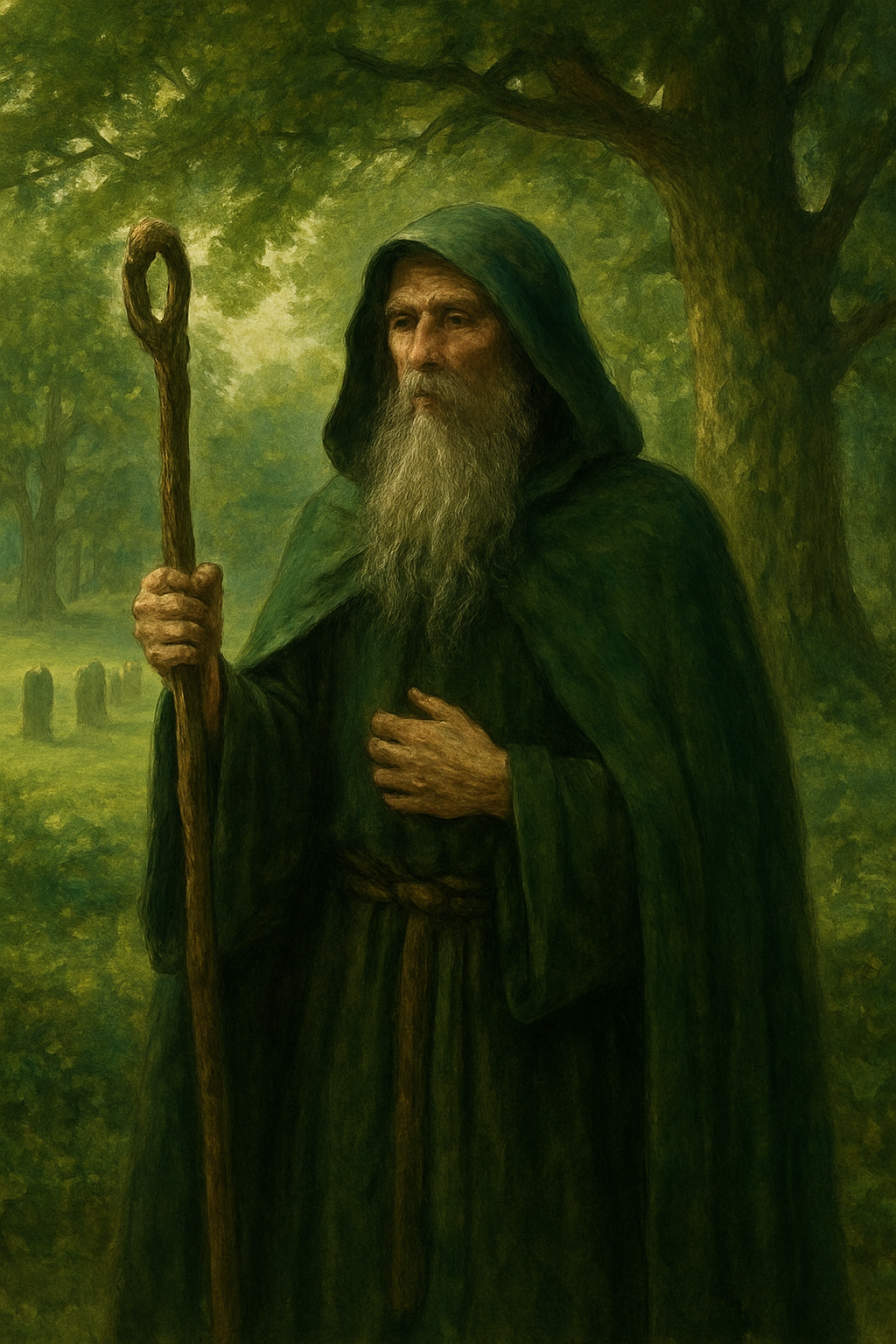
The word Druid conjures all sorts of images:
White-robed mystics chanting in oak groves, bearded philosophers dispensing wisdom, or even hooded figures tossing people into giant wicker cages. But when you strip away the pop culture and propaganda, what do we actually know about Druids? And what’s just myth?
The answer: not as much as you’d think. The Druids themselves never wrote down their teachings. Everything we know comes from outsiders—Romans, later Christian scribes, and modern reconstruction. Let’s untangle the threads.
What’s Solid History
1. They Existed.
Multiple Roman writers (Caesar, Pliny, Tacitus) confirm that Druids were a distinct class among the Celts in Gaul and Britain. They weren’t just priests—they acted as judges, healers, and philosophers. They were highly respected and had real power.
2. They Were an Oral Tradition.
Caesar tells us Druids deliberately refused to write down their teachings. Students studied for up to twenty years, memorizing myths, laws, rituals, and philosophy. That’s why we don’t have a “Book of Druidry” sitting in a museum today.
3. They Held Authority.
Druids weren’t fringe figures—they advised kings, settled disputes, and presided over major rituals. Roman sources even claim they could stop battles by stepping between armies.
4. They Revered Nature.
Sacred groves, oak trees, mistletoe, and standing stones pop up repeatedly in accounts of Celtic ritual practice. Even if details are fuzzy, it’s clear nature was central to their spirituality.
5. They Studied Philosophy and the Stars.
Druids were said to explore the “motions of the heavens,” the nature of the soul, and the universe itself. They weren’t just ritual leaders—they were scholars of their time.
What’s Questionable (a.k.a. “Maybe, Maybe Not”)
1. The Wicker Man Sacrifices.
Caesar describes massive human sacrifices where victims were burned alive in wicker cages. Gruesome? Yes. Propaganda? Also yes. The Romans had every reason to paint the Celts as barbaric. Archaeology suggests ritual killings did happen (bog bodies often show signs of sacrifice), but whether giant wicker cages were a regular thing? Doubtful.
2. Their Clothing.
Victorian-era revivalists loved to picture Druids in flowing white robes, flower crowns, and carrying golden sickles. Sounds fabulous, but there’s no evidence they dressed that way. For all we know, they wore whatever the local chieftain handed them.
3. A Unified “Celtic Religion.”
It’s tempting to think all Druids across Gaul, Ireland, and Britain practiced the same faith. In reality, Celtic culture was tribal and diverse. What one group’s Druid did might have looked very different from another’s.
4. Magic as We Picture It.
Later Irish myths show Druids performing feats like conjuring fogs, shape-shifting, or cursing enemies. Were they actually sorcerers? Or is that myth-making by storytellers trying to give their heroes and villains extra sparkle? Probably the latter.
What’s Purely Modern Invention
1. Stonehenge as a Druid Temple.
Nope. Stonehenge was already ancient long before Druids were around. The connection only appeared in the 17th and 18th centuries when antiquarians tried to link Celtic Druids to mysterious stone circles. Romantic, yes. Historically accurate, no.
2. The “Order of the Druids.”
Modern druidic orders—like the Order of Bards, Ovates, and Druids—are revivals, not direct continuations. They draw inspiration from Celtic lore, nature reverence, and modern paganism. That doesn’t make them less valid—but it’s not a straight, unbroken lineage.
So What Do We Really Have?
At the end of the day, the historical Druids remain half-shadow, half-substance. We know they existed, we know they wielded power, and we know they valued nature, law, and wisdom. The rest? It’s a blend of Roman bias, Christian storytelling, and modern imagination.
And honestly—that’s kind of the magic of it. Druids remain liminal figures, straddling the line between history and myth. They remind us that not all knowledge can—or should—be neatly written down.
So next time you picture a Druid, go ahead: let them stand under an oak tree, chanting about the cosmos. Just remember, half of what you’re seeing is real history… and the other half is the myth we’ve built to fill the silence they left behind.
Suggested Further Reading / Sources
If you (or your readers) want to go down the rabbit hole:
- Primary Sources
- Julius Caesar, The Gallic War (Book 6 has his descriptions of Druids).
- Pliny the Elder, Natural History (Book 16, on mistletoe and oak rituals).
- Tacitus, Annals (Book 14, describing the Roman assault on the Druids of Anglesey).
- Secondary / Modern Works
- Miranda Aldhouse-Green, The World of the Druids — very accessible, well-illustrated overview.
- Ronald Hutton, Blood and Mistletoe: The History of the Druids in Britain — the best critical history of Druid revival and myth.
- Barry Cunliffe, The Ancient Celts — broad look at Celtic culture with context for Druids.
- Philip Freeman, Celtic Mythology — covers Irish and Welsh sources that mention Druids.
Leave a Reply