
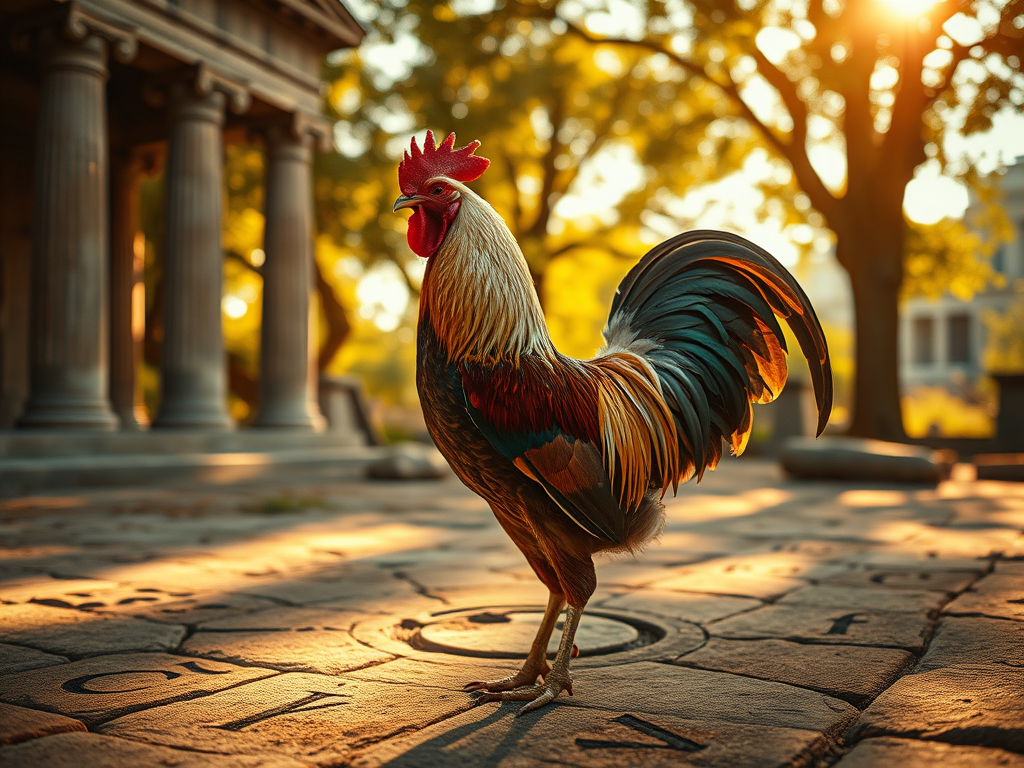
Alectryomancy (from the Greek “alektōr” meaning rooster and “manteia” meaning divination) is an ancient form of augury that interprets the behavior of roosters—particularly their pecking patterns, movements, and crowing—to reveal hidden knowledge or predict the future. This practice, once widespread across civilizations, played a crucial role in political, military, and personal decision-making.
Historical Roots and Cultural Significance
Ancient Greece and Rome: Seeking Answers from the Divine
Alectryomancy was highly regarded in classical antiquity, particularly in Greece and Rome, where divination was an essential part of statecraft, warfare, and religious practice. The rooster, a bird associated with the sun and the gods, was believed to be a bridge between the mortal and divine realms.
- Greek Practices:
- The Greeks linked roosters with Apollo, the god of prophecy, who was believed to send messages through omens. The morning crow of the rooster was seen as a symbol of enlightenment and truth.
- The most well-documented method involved placing a rooster in a circle with letters or symbols marked on the ground. The sequence of letters it pecked at was interpreted as a response to a question.
- Roman Influence:
- The Romans continued and refined the practice, often using roosters to divine the outcomes of political and military endeavors.
- One famous example comes from the 4th century AD when officials attempted to use alectryomancy to determine the name of the next emperor. The rooster pecked at letters forming the name “Theod”—interpreted as Theodosius, who later became emperor.
- Roosters were also used in augury, a broader form of divination practiced by state-sanctioned priests known as augurs. A rooster’s call at an unexpected time or place was often seen as an omen.
Alectryomancy in Other Cultures
Egypt and Mesopotamia: Roosters as Sacred Birds
- In ancient Egypt, roosters were associated with Ra, the sun god, and were sometimes sacrificed in rituals seeking divine guidance.
- The Babylonians and Assyrians recorded omens based on bird movements, including chickens, interpreting their behavior as signs of favor or disfavor from the gods.
Chinese and East Asian Traditions
- Roosters in Chinese culture are considered symbols of protection and vigilance, often used in geomancy (feng shui) to ward off evil spirits.
- While alectryomancy as a specific practice was less common, roosters were still observed in agricultural rituals and believed to foretell changes in weather or fortune.
Medieval Europe and Christian Symbolism
- During the Middle Ages, roosters retained their mystical status, often linked to St. Peter due to the biblical story of Peter’s denial of Christ before the cock crowed three times. This association reinforced the idea that roosters could foretell events.
- Some rural European communities continued using roosters for divination in folk traditions, particularly in predicting marriage prospects or upcoming deaths.
Methods of Alectryomancy
1. Alphabetic Divination (The Letter-Pecking Method)
- Setup: Letters of the alphabet (or symbols) are arranged in a circle. A rooster is placed in the center with grains scattered across the letters.
- Process: The letters where the rooster pecks first are recorded and interpreted to spell out words, names, or messages.
- Historical Use: This method was famously used to predict rulers or answer state questions in Roman times.
2. Food-Pecking Omens
- Setup: Two or more piles of food are arranged, each representing different answers (e.g., “yes” or “no”).
- Process: The rooster’s choice of which pile to eat from first determines the answer.
- Historical Use: This technique was used in personal decision-making and to predict military outcomes.
3. Observation of Movement
- Setup: A rooster is released in an enclosed space, and its movement is observed.
- Interpretation:
- If it moves toward a specific object, person, or direction, it may indicate guidance.
- Erratic or restless movement could suggest uncertainty or supernatural interference.
- Historical Use: This was often used in village settings for agricultural predictions.
4. Crowing and Timing Omens
- Unusual crowing (e.g., at night or in the afternoon) was considered an ill omen, signaling an approaching disaster or death.
- Direction of crowing was believed to indicate from where visitors or threats would come.
- Historical Use: Roman priests would listen to rooster crows at dawn to interpret the success of the day’s ventures.
Symbolism and Interpretations in Alectryomancy
Roosters were seen as messengers of divine will, and their behaviors were rich with symbolic meanings:
| Rooster Behavior | Interpretation |
|---|---|
| Pecks at certain letters | Forms words that reveal insights or names |
| Eats from a particular pile first | Indicates a clear decision or answer |
| Moves toward a specific direction | Suggests guidance or a fateful event |
| Refuses to eat | Sign of danger or unfavorable conditions |
| Crows at night | Bad omen, often linked to death or misfortune |
| Crows at an unexpected time | Unusual change or unexpected visitor |
Alectryomancy in Modern Times
While alectryomancy is rarely practiced today, remnants of its traditions survive in various ways:
- Superstitions Around Rooster Crowing: Many cultures still believe that a rooster crowing at night is a bad omen.
- Rooster Symbolism in Tarot and Dream Interpretation: Roosters appearing in dreams or divination readings can symbolize awakening, truth, and warnings.
- Folkloric Divination Games: Some rural traditions use chickens to determine the future of a household (e.g., predicting marriage or wealth).
- Astrological and Feng Shui Practices: In Chinese metaphysics, the Year of the Rooster is associated with boldness, foresight, and decisiveness—reflecting alectryomancy’s themes.
Final Thoughts: The Legacy of Alectryomancy
Alectryomancy is a fascinating example of how humans have sought meaning in the natural world. From Greek oracles to medieval folk magic, the rooster has long been a symbol of vigilance and prophecy. While the practice itself has faded, its influence remains in cultural superstitions, religious traditions, and symbolic interpretations.
Would you like guidance on how to incorporate rooster symbolism into modern divination techniques, or suggestions for a historical reenactment of an alectryomancy ritual?
Leave a Reply